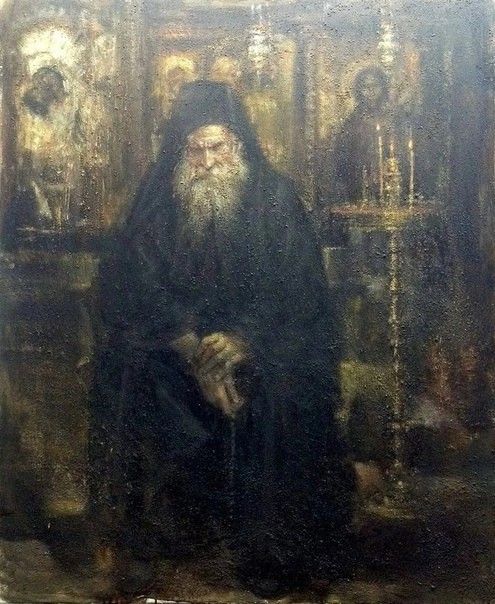
prayer, parenthood, and perfection
“Prayer signifies man’s turning toward God, the creature’s reaching forth to receive the light of the Uncreated… prayer is the most precious and indispensable means for man’s communion with God… By means of prayer, the energy of the true God penetrates man’s being and endows him with the strength to strive for the fulfillment of his calling. The longer he remains in prayer, the greater is his resistance to whatever corrupts or hinders the flow of its action” (The Enlargement of the Heart, 115).
Prayer changes us; it transforms the human heart—mystically and truly. Since my son was born I’ve been spending a lot more time in prayer and reading about prayer. It’s a reminder of what attracted me to the Orthodox Christian life so much in the first place. It’s also been reorienting me, through sleeplessness, toward a much less intellectually driven and rigorous writing. It took me over a week to even write what follows, but such is parenthood, and such is prayer and such is a life in Christ.
As Paul Kingsnorth wrote, recently,
“Words have their uses and their limits. God is not heard in whirlwind or thunder, but as a still, small voice. The Father does not shout, and neither did the Son. I am sure sometimes that God is light and silence, of a quality that down here we can only intuit, or sometimes barely touch, and even that renders us silent as well, if not blind and astounded for years.”
As I’ve been alluding to, even explicitly stating, in previous pieces, my interest has recently pivoted away from broad metaphysical analyses and critique toward a simpler, embodied—prayerful—faith.
Having been inspired by my baby, Nikiforos, and finally working through my patron St Nektarios’ work (he’s super dense!)—I’d like to focus on Who God is and what it means to follow Him.
For every person who chooses to take up their cross and follow after Christ there is a unique and unrepeatable encounter with God. That’s special and is at the root of the Gospel, because our God is one of encounter, and from that meeting, being transformed in and through Him.
What does it mean and what does it look like to know thyself in the light of Christ?
That’s the work of a lifetime and very much worth examining…
The Lord’s commandment, given at the mystical supper, entreats His disciples to pray in His Name (cf. Jn. 16:23-27). How loving is our Lord Who descended and took on Flesh to grant us the means to be united with Him? To realize the Kingdom within us?
This is why it is important to recognize prayer not as mere rote, mechanistic petition, but a supplication made from our love and need for God and acknowledgment that we are sinners in need of His mercy and want of communion. We do not pray in sole aim to gain, but to stand before God, emptying ourselves, in preparation to receive His Spirit and by His grace cultivate this dynamic as living temples of God.
The above from Archimandrite Zacharias illuminates prayer as a revelatory practice, helping to reveal one’s unique personhood through the fires of God’s grace, burning up what is false and spiritual hindrances. This is self-knowledge; stripping away the desires of the flesh, the wisdom of the world, and pursuit of possessions, that is, being enslaved by the passions.
In so doing, we remain in a state clinging to God in prayer thereby diminishing that which attempts to pull into the mire of false teachings and worldly lusts. Prayer is not a technique, but a gift of communion: this is why the Fathers and Saints talk about how we cannot will our way into the heart, but it is a gift of God’s grace which is preceded by acts of Faith.
Faith, a word that is a challenge to define abstractly (for me), is defined by an Orthodox philosopher and writer, Treydon Lunot, by stating that we do not denigrate the dignity of another person by logically setting out to “prove them,” we do not prove a person, but meet them face-to-face. Faith, then, is the opening of oneself up to a dialogue with God which leads to action, not out of legalism or fear, but from love. And if Faith is opening to God, the human story shows us why faith is so salvific and necessary.
The Fall of man was a cosmic horror: in his temptation, he sought a world without God—and in his Fall, he found it. God’s omnipresence was never threatened, but man, in his exile, discovered a hostile world, inhospitable to communion; by the sweat of man’s brow, he was required to labor for his bread (cf. Gen. 3:19).
Thistles and thorns grew from the ground reflecting the inner toil of our hearts, where passions and sins have taken root. Through ascesis, the sweat of our brow in the labor of repentance, eating our bread becomes a type of communion fulfilled in the coming of our Lord, Jesus Christ, Who is the very bread of heaven (cf. Jn. 6:58).
Such toil is the labor of repentance, recognizing our sin and how we are responsible for our own exile; we are responsible for the great chasm which separates us from God and neighbor.
For this reason, the Church understands sin as the alienation from life. It is a willful severance between God and by extension our neighbors; it is an act of ingratitude, treating creation, objects, and our very lives as things-in-themselves. In so doing, man continues to be at enmity with God and creation, by extension, at enmity with man. We see this in the inclination to set oneself up as the arbiter of truth in one’s own life, becoming like the Hebrews in the time of the judges: every man does that which is right in his own eyes (cf. Jud. 21:19).
When we look at this, we may see how morality has become relative throughout the ages, yet morality is borne out of man’s fidelity to God; ours is not an empty moralism, but a loving obedience and seeking to cultivate virtue because that brings us closer to God.
We are called by Christ to be perfect as our Father is perfect and perfection is in the Person of Jesus Christ (cf. Matt. 5:48; Eph. 4:13); and to Whom we aspire to become like in our lives—not to deny our distinct personhood—but through Him, find it.
Therefore, we see biblical normative claims as affirming and helping man preserve communion, as in the Old Testament this was preparing God’s people for a more perfect communion with Him through Jesus Christ. The ten commandments, again, seen in the light of Christ, are prescriptive pertaining to relationality, grounded in communion.
Thus, our Father among the saints, St. Clement of Alexandria, writes:
“No servant can serve two masters. If, therefore, we wish to serve both God and Mammon, it is not expedient for us; for what advantage is it if a man gain the whole world, but lose his soul? Now this life and the life time come are two enemies. This life preaches adultery, corruption, covetousness, and deceit; but the life to that is to come renounceth these things. We cannot, therefore, be friends to both” (II Clement 6:1-5).
Sin is the hearkening to the preaching of this world, being at enmity with God (cf. Jas. 4:4); it is an embrace of darkness and error, refusing to see life as a gift of God but something to be used to further one’s own ends; it is in friendship with the world that one continues to fall away from God and neighbor, becoming blind to the thistles and thistles growing around the heart.
Faith, then, isn’t an enemy of reason, nor is it opposed to knowledge: Faith is turning toward God to meet Him face-to-face and from there be changed. Christ came to redeem man and through the Incarnation brought communion back to the central focus of man’s heart. In that light, prayer and repentance, become a returning to ourselves and from there back to our Father’s house (cf. Lk. 15:11-32).
Therefore, our personhood emerges from communion; we were created for a purpose which is written on our hearts. The realization of this purpose requires the spadework of prayer and repentance, and it reflects the Orthodox understanding of destiny.
As Rev. Dr. George C. Papademetriou (may his memory be eternal!) notes, Man’s destiny is not to achieve mystical union with the essence of God, but rather to become spiritually perfect by participating in His uncreated energies. This happens through synergy, that is, our own efforts met with the help of God’s grace. It is this partnership that leads us to the spiritual heights of perfection (An Introduction to Orthodox Spirituality).
Although the Church rarely appeals to destiny, it does affirm what St. Maximus the Confessor called the logoi (plural logos). The logoi pre-exist in God, and every creature has its own: a unique and divinely sanctioned reason, purpose, and calling.
“For we are His workmanship, created in Christ Jesus for good works, which God prepared beforehand that we should walk in them” (Eph. 2:10). Through the sacramental life, participation in the divine uncreated energies, man’s logoi is realized and actualized as a dynamic partaker of God’s grace—simply put, the logoi is the unique why behind our existence; God’s Creation is a doxological symphony and just as every bird of the sky possesses a unique song written for it to sing, so too does everyone have a song we are given to sing.[1]
This is one of the more beautiful parts of parenthood: what kind of song will Nikiforos sing? What will his unique why look like?
These types of questions reflect the very love of our Father Who wants us all to find our song in Him.
While this is the surface of a complicated theological element, understanding our logoi is not abstract philosophy, but actively carries practical consequences for our lives, revealing how every choice we make is relational: either cultivating communion with God or at variance with it.
We, who have free will, can choose not to heed the call of our logoi to commune with God—deep calls to deep (Ps. 41:8 LXX)—and in so doing we willfully sever our connection with God and our fellow man by disconnecting from our deepest, and true, self. Self-knowledge cannot be pursued as an individual; the self cannot know itself without being in relation with Other.
Therefore, instead hearkening to the preaching of this world—which distorts who we are—we are called to take up our cross, crucifying the passions which are the very thorns and thistles of our hearts keeping us away from God and the hidden man of the heart.
Prayer and repentance, therefore, are the means in which man remains in communion and actualizes his logoi by participation in God. Man’s unique, personal calling, as such, is rooted in communion.
This calling does not emerge from a vision quest or self-realization techniques, but out of a living, loving, dynamic relationship with Persons. Furthermore, it is predicated on man’s abiding by the commandments of God: “that ye be loving one another, even as I have loved you” (Jn. 15:12).
What this means is that self-knowledge is not a given nor is it our ability to recognize our calling and purpose. Who recognizes us is God, for the Good Shepherd recognizes His own, and He calls out to each of us, because perfection is covenantal. It’s not about tying our self-worth to flawless executions, but simply putting the hand to the plow, not looking back to the things of this world, and striving toward the Kingdom every day (cf. Lk. 9:62).
Friendship with the world, therefore, is not merely enmity with God, but self-abandonment, self-distortion, and, ultimately, sin. In our chasing the temporal and fleeting things of this world, we are hindering our relationship with God and our development as persons in and through Him; we are abandoning our logoi’s unique calling and purpose. In doing so, we are pursuing and embracing a life alienated from Him Who gave us His life.
Ultimately, prayer is the very means that we remain focused on our calling, that we choose life through Christ’s preserving us in Him. Repentance is the practice of continual deepening of our connection with God and self; it is the very concentrative effort which guides us to God by actualizing who we are in Christ.
I believe that an easy way to neglect this process of becoming and listening for the still, small voice of God is simply not practicing prayer, not striving for the Kingdom in repentance, and not allowing for silence. Spending time online has become a burden because I don’t have the capacity for news or ideas; even my regular diet of theology and philosophy seem to be coming in and going out.
What this feels like is a call to go inward. A call to sit outside and let the sun’s rays dance; a call not to think but to be still. Let Niki speak and try to listen; listen as this wonderful creature reaches forth to receive the light of the Uncreated even if, in my fallenness, my eyes see only a baby that needs changing. He is much more than that and so am I—and so are you—we all have a song to sing. Living prayerfully, faithfully, means opening oneself up to hear the symphony and adding our unique doxology to the tapestry of the cosmos.
“Be rejoicing in the Lord always; again I will say, be rejoicing. Let you reasonableness be known to all men. The Lord is near: Cease being anxious about anything, but in everything by prayer and entreaty, with giving thanks, let your requests be made known to God. And the peace of God, which surpasseth all understanding, shall guard your hearts and your minds in Christ Jesus” (Phil. 4:4-7).
Ο ΧΡΙΣΤΟΣ ΕΝ ΤΩ ΜΕΣΩ ΗΜΩΝ! ΚΑΙ ΗΝ ΚΑΙ ΕΣΤΙ ΚΑΙ ΕΣΤΑΙ
[1] https://orthodoxstandard.blogspot.com/2025/04/word-of-week-series-synergy-logoi.html
 Witness, NM
2 responses to “A Return to Center”
[…] I mentioned in a previous post, my interest in—and practice of—prayer has intensified alongside parenthood and sleeplessness. […]
LikeLike
[…] its pages help us to continue asking, and deepening the meaning of the very question asked a few posts […]
LikeLike