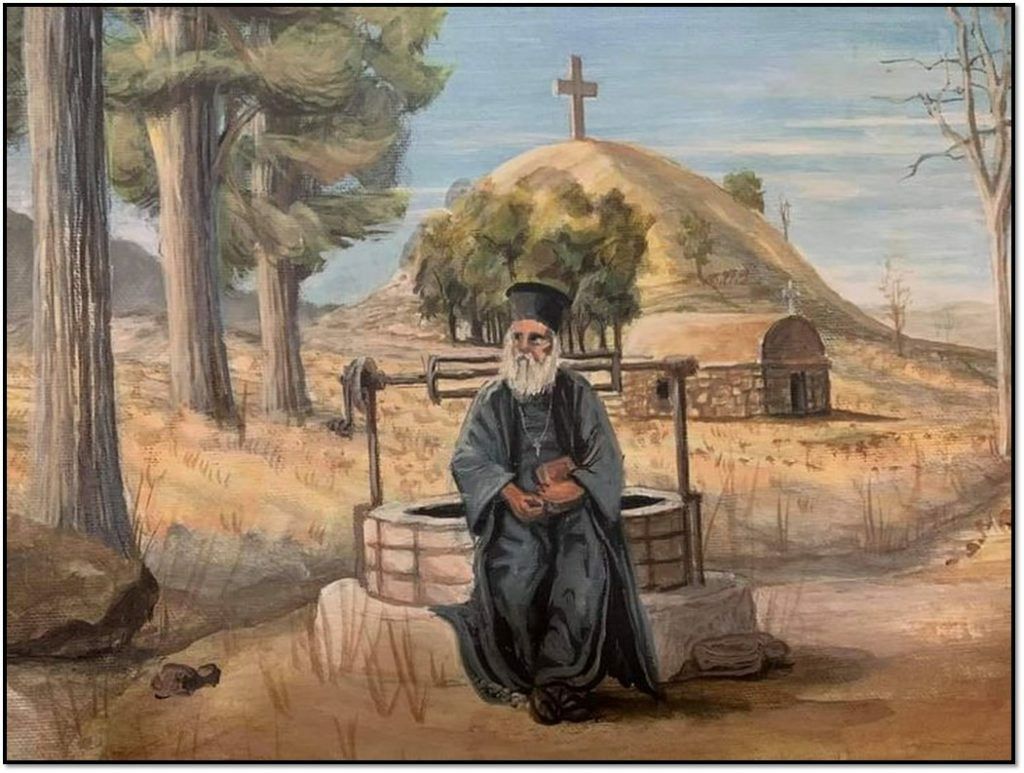
Prayer, pastoral care, and perfection
“Make the following a rule—first of all, anticipate trouble at every moment and when it comes encounter it as something expected. Secondly, when something happens that conflicts with you will and is on the point of irritating and upsetting you, hasten to bring your attention into your heart and strive with all your might to prevent such feelings from arising: steel yourself against them and pray… In the third place, put out of your mind the all expectation that the nature of things will change, and resign yourself to life-long friction… Finally, with all this, preserve a good-humoured expression, an affable tone of speech, friendly behaviour… Accustom yourself to preserve the remembrance of God unceasingly” (St. Theophan the Recluse: The Art of Prayer, 229).
Last week, we looked at the Orthodox Christian tradition of hesychasm. This brief look at the tradition, contrasted with Robert Foreman’s pure consciousness event, led me to reflect more deeply on this tradition of contemplative prayer and what prayer is. The following is a reflection based on the reading of St Nektarios’ Lessons on Pastoral Care.
The book highlights the central duties and disposition of the Church’s presbyters, however I think it offers everyone, from laymen to the episcopate, something beneficial to their struggle toward salvation and emphasizes a quality of character more in line with St Paul’s twelfth chapter of the Epistle to the Romans than Canons of the Church.
Ultimately, its pages help us to continue asking, and deepening the meaning of the very question asked a few posts ago:
What does it mean and what does it look like to know thyself in the light of Christ?
St Nektarios writes of the priesthood, painting a wonderful and terrible portrait of a vocation that requires every man who seeks to serve the Church of Christ to count the true cost of discipleship. He encourages those men to acknowledge the grace that must be preserved through decorum and dignity; watching one’s speech as well as their walk, their manner of dress, and certainly who they spend their time with, for as the Apostle writes:
“Do not be deceived: ‘Bad company ruins good morals’” (I Cor. 15:33).
Does he spend time in prayer and restlessly preserving his flock from the noetic wolves which seek to scatter Christ’s own by wounding the shepherds’ mind and heart?
This is why, for not simply the spiritual shepherds of the Church, but all Christians are called, by Christ, to remain watchful in prayer. That is to say, mindful of our mental diet, considering what we put into our minds that cling to our hearts, for this is what we bring forth (Cf. Matt. 13:34-35; Prov. 4:23). The Lord knows man’s heart, but to know God is predicated on our own cleansing our own heart by His grace, that is, living the sacramental life and a life of prayer.
As St Nektarios wrote: “Seek God daily. But seek Him in your heart, not outside it. And when you find Him, stand with fear and trembling, like the Cherubim and the Seraphim, for your heart has become a throne of God. But in order to find God, become humble as dust before the Lord, for the Lord abhors the proud, whereas He visits those that are humble in heart.”
If we do not seek God in our hearts, we will seek Him elsewhere, in the things of this world that decay; God’s grace sustains the hearts of men who seek Him there, but we must abide in Him by clinging to the commandments. Such is the work of synergy, being filled by God’s grace in our emptying before Him.
This is the power of the Jesus Prayer (or the Prayer), and it is one of the more important aspects of its practice.[1]
The human—mortal and carnal—needs prayer because it is we who forget God. It is we who seek God’s throne for ourselves. The Prayer, when beginning, is a mental remembrance; often it risks becoming mechanical, rote, but the Prayer itself, when ardently and assiduously practiced, teaches the heart through formation. The Prayer, calling upon His Name, is ontologically linked with the Person of Jesus Christ.[2]
This form of prayer trains our awareness to focus on heavenly things and not of the things of this world: for, as the Apostle writes, we have died and our lives are hidden with Christ in God (cf. Col. 3:2-3). The practice is helping us let go—lose our lives for Christ’s sake—to find them with Him, that is, finding the hidden man of the heart (cf. I Pet. 3:4). It is not something we do ourselves; this is not magic, but a yearning for Christ out the depths of our heart, deep calls to deep, a cry to Him out of a heart being cleansed of its passions; it is a petition from a nous being purified. A nous made whole by God’s grace.
St Nektarios writes of the need for the spiritual shepherd to examine himself daily; to live out a life of repentance and self-denial. To live out a life of peace, that is, steadfast faith within himself and in the souls of the flock entrusted to him by God. And while St Nektarios’ words are aimed at the formation of spiritual shepherds, this daily practice of self-denial and repentance is meant to be modeled by them that their flock might be instructed by their actions, for we are all called to rest in Christ’s peace (cf. Matt. 11:30).
This peace is not a worldly peace, but the peace of God that surpasseth all understanding (cf. Phil. 4:7). Such peace is a gift of God, and this peace is God’s sustaining energies that allows us to remain whole within the pressures of this world.
This peace is an essential part of the full armor of God (cf. Eph. 6:10-18), granting us His power to navigate this world guarded by His energies. The spiritual shepherd and his flock are sojourning through this life, amidst the enemies of God who try to tempt His people to be led astray. Yet, peace allows us to become dispassionate, abandoning the world’s push and pull. Such is the point of prayer itself: to—by God’s grace—form us and gather us in Christ; it is training us to remain in Him, to abide in Him as He abides in us.
The challenge of prayer comes from our fragmented nature; there are so many thoughts which come from within and without seeking to make us forget the presence of God.
Repentance is not merely feeling sorry for what we’ve done but standing before God without trying to justify ourselves in His presence. The more I’ve read of the Gospel the more it feels like that day of Judgement will be less God giving us an account of what we’ve done, but more so being in the presence of Christ, sitting in silence on the seat of judgment, His countenance shining brilliantly before us and, in His light, that which is not of Him comes forth. It will look very much like St Peter falling before the Lord, saying, “Depart from me, for I am a sinful man” (Lk. 5:8).
This is not a pleasurable experience; it is the very cross. We seek prayer as an inner Golgotha, daily, where we do not seek to justify ourselves, but to die and allow God’s light to shine on the areas of our lives where we are lying to ourselves and severing our connection with God and neighbor.
St Ignatius Brianchaninov echoes this sentiment, writing:
“It is the nature of inner prayer to reveal the hidden passions concealed in the human heart and to tame them. Inner prayer shows us our captivity to the fallen spirits, making us realize our imprisonment and freeing us from it.
“There is no need, then, to be disturbed and perplexed when passions rise up from our fallen nature or when they are spurred on by evil spirits” (The Art of Prayer, 216).
This inner state of oppression is met with the Prayer, calling upon Christ’s Name amidst the overwhelming onslaught of passions and invading hostile thoughts (logismoi): this, according to St Ignatius, is the time of hidden martyrdom.
It is like sitting still in a furnace that grows hotter all around us, yet we simply fix our attention on God (cf. Dan. 3).
For me, this practice has been challenging and clarifying, because of my own issues with my neck and spine, most of my waking moments feel like I’m on fire and in that needing to remain calm. While this fire, thank God, has been slowly dying down thanks to various interventions, my ability to remain steadfast within the flames of dysregulation and crushing pressure in my head has increased, too.
Repentance, and offering my suffering to God, has allowed me to see a greater overview of my life and this affliction. For the past five and half years most of the time it has felt like I have been drowning in pitch; I have been with suffering and this has allowed me to change my mind—literally metanoia—to repent; suffering has allowed me, even forced me, to explore fields of philosophy and theology that, as a younger man, I could only pretend to have a vague understanding of.
Yet, suffering has forced me to invest a considerable amount of time and energy in metaphysics, phenomenology, and contemplative exercises; at first, it was survival but slowly became formative. As Kierkegaard once wrote: Suffering keeps you focused.
Suffering has taught me how to remain still in the furnace, rejoicing and praising God all the while like the three holy youths in Babylon.
I cannot recall what it was like to walk in a “normal” mode of perception. I bring it up, because with a lot of faith and help from chiropractors and my wife the furnace is finally starting to decrease its heat.
I am still learning to pray and certainly have a long way to go, but God grants us the crosses which we carry for our salvation; this cross that He has allowed to befall me has been beneficial to my healing—such is the way of Christ.
I am not whole, but suffering—when offered to God—unites us to Christ Who suffered for the world and through His suffering recapitulates all things in Himself (cf. Eph. 1:10), making what was once not of Him His very own.
To return to the spiritual shepherd, it seems to me that St Nektarios’ words speak to those who must count the true cost of discipleship. This doesn’t just mean that they need to guard their hearts, their minds, and relentlessly strive to preserve the flock entrusted to him by God. It means persevering in the furnace that God allows, remaining vigilant amidst the flames thereby cultivating patience and the peace of God, for it is only in the peace that Christ gives that sustains us through the fire.
This is the peace that Christ offers to His people: He does not offer to take away our cross, but He is in the cross God allows us to carry. When we truly embrace the cross then not only do we encounter this peace, but like the Apostles we then can offer that peace to others and, by moving through the furnace, we can help those who come behind us to find stillness in the flames and know God (cf. Ps. 45:11 LXX).
Suffering has taught me that, if we run from our cross, we not only have no peace in our lives, but we also have none to offer others. Selah.
Great are the accomplishments of faith,
for the Three Holy Youths rejoiced in the fountain of flames as though in the waters of rest;
and the prophet Daniel appeared,
a shepherd to the lions as though they were sheep.
So by their prayers, O Christ God, save our souls! (Troparion of the Three Holy Youths)
Ο ΧΡΙΣΤΟΣ ΕΝ ΤΩ ΜΕΣΩ ΗΜΩΝ! ΚΑΙ ΗΝ ΚΑΙ ΕΣΤΙ ΚΑΙ ΕΣΤΑΙ
[1] Also called the Prayer of the Heart, it is deceptively simple yet profoundly beautiful; a contemplative expression of the Church’s theology, rooted in the hesychastic tradition going back to the fourth century (OrthodoxWiki).
[2] “The Name of Jesus was given by revelation from Above. It originates from the energy of the divine Being, out of time, and it is not at all a human device. This revelation is an action of the divinity, and confers universal glory on the Name, which is ontologically linked with Christ, the Person who is named… That is to say, the Name of Christ is inseparable from the Person invoked” (Arch. Zacharias, The Enlargement of the Heart 139)

