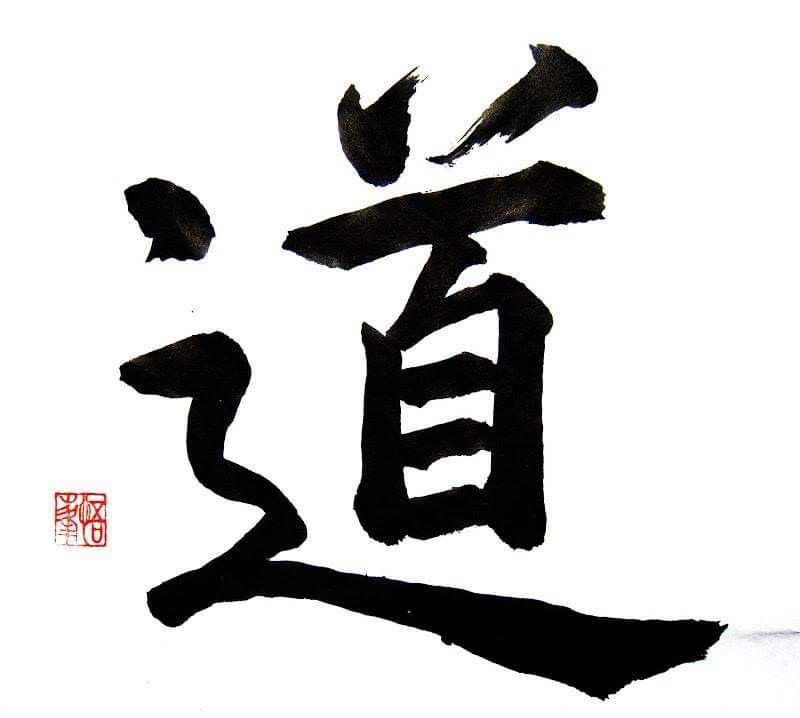
Recovering the lost memory of God and eyes to see Him
I’ve been writing weekly essays on theories of religion and, more recently, mystical texts for about a year now. What follows is part formal summary, part exploration. I’ll indicate when the shift occurs.
While the summary specifically looks at the comparisons and contrasts between Daoism and Sufism, what later came out of it began as a conversation with my wife, who knows more about Daoism than I do. We were discussing how Daoism emerged in ancient China during a period of pronounced monotheism, something I suspect changes a lot of our assumptions about the tradition. So, while this piece may wander a bit, I think it distills what I find essential, at a genetic level, regarding metaphysical inquiry. What these diverse miss and what others see, though dimly. Enjoy.
Despite their inherent differences, there is a clear similarity throughout the mystical writings of Lao Tzu, Ibn Iraqi, and Ibn Arabi: the rejection of discursive reasoning in favor of experiential participation. Where metaphysics applies logic and philosophical principles to understand transcendental reality, mysticism seeks to unite the aspirant to Reality directly.
These mystics possess an a priori-metaphysic within their work, not as a rejection of metaphysical realties, but an explicit recognition that abstract inquiry cannot grasp what must be experienced, as Lao Tzu writes, “The Tao is forever undefined… It cannot be grasped.” Ibn Arabi further cautions, “He who seeks to know the Reality through theoretical speculation is flogging a dead horse,” capturing the premise behind these texts. The writers do not deny logic, but they underline the epistemological limitations in regard to approaching the Divine.
The writers turn away from abstract knowledge and metaphysical claims made through rational inquiry; they do not appeal to logical demonstrations but revelations in presenting their positions, emphasizing experience over proof. The philosophers ought not to be mistaken for being irrational; far from lacking reason, their critique is grounded in revelation and experiential epistemology.
Lao Tzu, almost two thousand years before the Sufi poet, echoed the same sentiment, “The Tao that can be told is not the eternal Tao. The name that can be named is not the eternal name,” this opening statement underscores Lao Tzu’s understanding that rational inquiry has limits. His critique of theoretical speculation is sharpened by his call to experiential participation, “The greatest Virtue is to follow Tao and Tao alone.” Thus, the Dao that can be named is the Dao that one is observing, not experiencing.
While the Daoist and Sufi writers both challenge the primacy of reason, this does not mean that they are grounded in the same ontological reality. They possess distinct starting points for their conception of reality, whether experiential or abstract, and while they share similarities, beneath these surface evaluations reveals different understandings of transcendental realities.
Lao Tzu postulates the impersonal Dao meant to be aligned with through participation; to follow the Dao is the greatest virtue, continuing, “Stand before it and there is no beginning. Follow it and there is no end. Stay with the ancient Tao, Move with the present.” Lao Tzu offers no logical proofs, yet soberly illustrates the unnamed, ineffable Dao that cannot be pointed to, but felt, and embodied. To live in harmony with the Dao is not a methodical process of logical reasoning; it’s a mode of being. An existential argument rather than a demonstration.
The Sufi philosopher-poets depart from the concept of impersonal force, because their own metaphysical assumptions were grounded in Islamic thought, meaning they understood reality as having its origin from a personal creator, which led to a radically different orientation than Lao Tzu with Islam’s Five Pillars advocating for, among others, a declaration of faith and prayer. Sufism, then, begins from a place of reverence for a personal and transcendent Deity leading, ideally, to fana: the annihilation of self and proceeding subsummation into the Divine.
The Sufi writers point to a monistic non-dual reality as illustrated by Ibn Iraqi, “Beware, beware of the word, ‘two.’ ‘I’ and ‘You’ have made of man a duality; Without these words, You are I and I am You,” and, continuing, he the mystic draws parallels with Lao Tzu’s experiential orientation, writing, “If you lose yourself on this path, Then you will know for sure: He is you, and you are He.” Thus, there is an implicit required humility and surrender found throughout these writings, and while there is an epistemic humility needed for discursive reasoning and logical deduction, the form of humility and surrender the mystics encourage is that of experiential participation in the Ineffable. The mystic cannot be rooted strictly in reason, because union with Reality is, by its nature, suprarational.
The two share monistic qualities and advocate for dissolution of self; however, their metaphysical assumptions differentiate the outcome of their respective praxis: Daoism encourages the dissolution into “the great Tao flow [which] fulfills its purpose silently and makes no claim… It does not show greatness, And is therefore truly great,” becoming one with the impersonal, harmonizing with the immanent. The Sufis also promote humility and surrender, not to an impersonal force, but to a personal, transcendent Deity. This is present in their mystical writings as much as it is present in their practical orientation toward prayer, faith, and ritual.[1]
The risk of collapsing either tradition into a generalized “spiritual monism” is a modern-day misinterpretation which we find often in the overly relativized world. Unfortunately, this perspective overlooks the Daoist and Sufi traditions’ arising from specific, and radically different, theological and cultural roots. Despite their shared monistic inclinations, call to humility, and self-dissolution, Daoism and Sufism understand union with Reality distinctly: the one seeks to harmonize with an impersonal, immanent flow and the other endeavors to unite with a transcendental, personal Deity.
Sources: Divine Flashes — Fahkruddin Iraqi; Meccan Revelations — Ibn Arabi; Dao De Ching — Lao Tzu
[End: scholarly essay. Shift to: Personal Rumination]
Notably (and what was outside the scope of this essay), ancient China as far back as the 21st onto the 11th century BC the people believed in one supreme God, called Shang Ti, Shang meaning “above”, “superior to”, and Ti meaning “ruler” or “lord.”
If you haven’t guessed by now, this is of extreme importance, not only historically, but methodologically, because it challenges the evolutionary assumptions that are baked into how we moderns approach so-called primitive religion.
Now that we have seen how the Daoist and Sufi mystics sought participation in the Absolute beyond discursive reasoning it is worth reflecting on what assumptions we, the readers, bring to our engagement of these texts. There are certain prejudices the Western mind naturally brings to mystical (especially Eastern) writings, and often these are based on faulty 19th-century presuppositions that obscure rather than illuminate historical reality.
The historian John Ross writes, “It is… evident that the belief in the existence of one Supreme Ruler is among the earliest beliefs of the Chinese known to us. Of an earlier date, when no such belief existed or when the belief in polytheism did exist, we find no trace. Nowhere is there a hint to confirm the materialistic theory that the idea of God is a later evolutionary product… or that the belief had arisen indirectly from any other similar source” (Christ the Eternal Tao 222).
This is a significant historical observation because, as Ross notes, this substantiates counter-evidence to the anthropologist E.B. Tyler’s development theory for religion. In his 1871 book, Primitive Culture, he postulated that religions begin with animism, evolving into polytheism, further evolving into monotheism, finally evolving into the last stage: scientific-materialism. Tyler’s work assumes a consistent evolution across-cultures and presupposes materialist metaphysics, which drastically reduces—and distorts—his study, because the conclusions are found in his premises.
Nevertheless, this evidence may be troubling to those of us raised under the occupation of Enlightenment anthropology; perhaps the skeptics dismiss this outright, but the fact remains: There is compelling evidence to substantiate the claim that ancient peoples worshipped one Supreme Being, before they became entrenched in animism and polytheism. If this is the case, then our modern narrative that religion has evolved from complex animism to scientific rationalism requires revisiting.
E.B. Tyler may not be the concern of the above work, but it is worth taking a closer look at his findings because, for many, Tyler’s religious theory has become a mainstream, anti-theist, atheist, and modern talking point; while shedding a light on his development theory, hopefully we can also understand that materialist metaphysics are fundamentally a part of how we see the world because of men like Tyler.
Tyler arrives to the scene, building on David Hume’s Natural History of Religion, this noted atheist and corresponding philosophy suggests bottom-up logic and deduction which posits that man is the arbiter of truth, sense, and reality which means that Spiritual Beings and the eventual arrival at the Supreme Deity are psychological functions of man’s primitive mind, a holdover for when man did not have Enlightenment thinking to help make sense of the phenomenal world.
Tyler suggests that man, as a type of deity, projects his hierarchical structures onto the spiritual world, creating a mirror of his own social organization. However, this further illustrates the limitations of Tyler’s animistic study, because he does not believe in any circumstances in which man’s hierarchal structures could be patterned after spiritual structures; it is clearly bottom-up rather than top-down in his view. Tyler’s reliance on Hume and Enlightenment thinking shapes his development theory, but this framework introduces significant limitations that undermine his conclusions.
Drawing on the conclusions that Tyler makes that the Supreme Deity is a completion of this development theory would mean that he is correct in his assertion that animism is a completely universal phenomenon that can be measured consistently over all cultures, whether they are extinct or untouched. This is a faulty generalization based on some evidence, but not all, and even self-refuting as he mentions that the Aboriginal animism of malignant spirits surrounding the community and being fairly pervasive is unlike the animism of North America and so on. If this generalization is erroneous, and this writer argues that it is, then any level of “development theory” and the monotheistic completion to Tyler’s theoretical structure is also erroneous.
Tyler also makes many connections between animism and his current society’s Christianity and while this Christianity is a particular kind following the Schism, the Reformation and Enlightenment it does not appear that one could strongly argue that animism, left to its own devices could, eventually develop the complex theology and philosophy of Trinitarianism that Christianity holds to. At best, Tyler’s theory is completed in monotheism of a basic type, with an ascendant deity rising above their pantheon, yet still being conjured from human projections.
Ultimately, Tyler’s treatment of animism is implicitly a product of English evolutionary and anthropological Darwinism, which was based on an Anglo-centric worldview, with the rest of the world needing to be “evolved” or brought into the light of modern thinking. This attitude not only led to Tyler and his contemporaries referring to primitive cultures as savage and the like but also provides compelling evidence to suggest his theory was biased, a product of its time, and in no way able to account for the complexity of primitive culture, spirituality, and animism as it was understood in the variety of cultures that it shaped.
The origins of religion are often misread through the modern, biased, and inadequate anthropological lens; my aim with my work is to—ultimately—make the case for the recovery of an older, liturgical way of seeing. A mode of seeing that can read through the symbols of pre-modern religion and philosophy not as man developing his reason, but as man struggling to articulate his yearning for his Creator. With that in mind, we can return to Daoism, seeing that our faulty post-Enlightenment assumptions obscure the fact that Tyler’s conclusions are not universal and his development theory is wrong.
Ancient China falsifies Tyler’s claims; “The religion of Egypt’s first dynasty (ca. 3000 BC), for example, was much more pure than the forms of polytheism that arose in later dynasties. Mircea Eliade [religious scholar] writes: ‘It is surprising that the earliest Egyptian cosmogony yet known is also the most philosophical. For [the Supreme God] Ptah creates by his mind (his ‘heart’) and his word (his ‘tongue’)…. In short, the theogony and cosmogony are effected by creative power of the thought and word of a single God. We here certainly have the highest expression of Egyptian metaphysical speculation…. It is at the beginning of Egyptian history that we find doctrine that can be compared with the Christian theology of the Logos’” (Ibid. 221).
Across cultures and religions, we see a pattern emerge, not of an emerging vision of divinity, projected by man’s imagination, but of the remnants of a primordial Truth faintly echoed by scattered and diverse tongues. Effectively, these historical findings support the Christian worldview that, even after the Fall, “man as a whole was still more simple and innocent, closer to God and nature, than he is today. Thus, his knowledge of God was more pure” (Ibid.).
We began civilization as monotheists and from there lost our knowledge of God and descended into further fragmentation of our connection with God, our heart-mind, and that externalized into animism, polytheism, and—of course—scientific materialism. Ancient China, like the ancient Hebrews, retained this pure form of understanding of the one, true God. Yet, the Chinese departed from the Way, gradually moving from simplicity to complexity, as the primordial fall became more and more entrenched into man’s nature (Ibid. 224).
And so, by the time Lao Tzu was born in the 6th century BC, while China was still essentially monotheistic, it had departed enough from the Way that there was a tangible distance between man and God. Lao Tzu sought to embody primal man’s undifferentiated consciousness; ultimately, he and his writings harken back to the first created man: Adam. This is the root of Daoism; it isn’t animistic, nor did it originally believe in an impersonal, immanent flow of reality, but genuinely was striving to return man’s fallen nature back to its primordial apprehension of Reality.[2]
Now, this is not suggesting that Lao Tzu was a proto-Christian, or that Daoism is a type of obscure Christianity, but it is to recognize what the St. Justin Martyr called logos spermatikos, that is the seed of the word, or the reason in man. St. Justin writes of the spermatic word in his First and Second Apologies:
“We have been taught that Christ is the first-born of God, and we have declared above that He is the Word [Logos] of whom every race of men were partakers; and those who lived reasonably are Christians, even though they have been thought atheists; as, among the Greeks, Socrates and Heraclitus, and men like them” (First Apology, Ch. 46).
“For each man spoke well in proportion to the share he had of the spermatic word, seeing what was related to it… Whatever things were rightly said among all men, are the property of us Christians… For all the writers were able to see realities darkly through the sowing of the implanted word that was in them” (Second Apology, Ch. 13).
The patristic understanding of the logos spermatikos provides a theological framework for recognizing the rays of truth founds beyond Israel’s covenant. The Fathers saw these rays of light in the works of Plato, Aristotle, and Greek poets; like them, Lao Tzu’s intuition of the Way is not an alternative revelation, but a dim vision of the primordial Logos.
Within this framework, Lao Tzu’s intuition of the Way is not an alternative
Thus, we see Lao Tzu writing, prophetically, of the pre-Incarnate Logos, or Tao/Dao; his call for experiential participation, “The greatest Virtue is to follow Tao and Tao alone,” expresses the same sentiment of the Orthodox Church. The greatest virtue is to follow the Logos and the Logos alone. The Orthodox Church, like Lao Tzu, emphasizes experiential participation of God, wherein “we might become partakers of the divine nature” (II Pet. 1:4). Further, the Church’s participatory, sacramental theology paired with its communal ontology underscores the necessity and importance of acquiring a pure heart.
If following the Logos is the highest virtue, then man’s capacity to perceive Him must be purified; hence, the heart’s centrality to Orthodoxy, because of its being the noetic center of man. The heart is not simply the corporal cardiac faculty that pumps blood, but the heart-mind that is the incorporeal faculty that allows man to apprehend Reality, to see God and to commune with Him.
While the Orthodox Church does not dismiss logic, the intellect, or rationality—we believe that our intellect gives us the ability to offer rational worship to God—the purity of the heart cannot be cultivated through logical deductions or proofs. The purity of the heart-mind comes through worship, prayer, and living out the greatest virtue: following the Logos and the Logos alone.
Lao Tzu and Ibn Arabi’s mystical treatises illustrate that knowledge is not something that can be built solely by the intellect. It’s a post-Cartesian worldview that assumes the primacy of rationalism and the intellect, leading to propositional assent of doctrines and creeds. This is just not how knowledge works, because man is an embodied creature, so are man’s comprehending faculties. Thus, the mind may know, but the heart understands and communes. This is true, deep knowledge (which we’ll expand when we discuss morality and love, epistemically).
Lao Tzu claims, “The Tao that can be told is not the eternal Tao. The name that can be named is not the eternal name,” acknowledging the limits of rational discourse; it’s not something we can ever really, logically wrap our heads around—like the Trinity—and so it is only understood through uniting with it. It is precisely what we find in Christianity: union with God is man’s primordial vocation. This is not suggesting that Daoism and Christianity are similar, but that Lao Tzu is one of history’s extra-biblical prophets.
While he didn’t know the Name of the eternal Dao/Logos—because the pre-Incarnate Logos had not been revealed by Name, yet—he did, through his contemplative mysticism and cultivation of his intuitive knowing, became aware the Dao is a benevolent Being. However, despite Lao Tzu’s cultivated virtuous intuition, he still could not understand the Dao as a Person, because this is a product of revelation, such as the one given to Moses through the Theophany of the unconsumed bush.
An essential distinction remains here, with Lao Tzu’s intuitive knowing remaining only a yearning for God and Islam’s later Sufi poets attempting to dissolve all distinction in God’s unity. The revelation of God, however, preserves difference without opposition, as we see in this Theophany to the prophet Moses.
Interestingly, this Theophany serves as one of many recorded moments of revelation, that is, God’s manifestation and divine intervention, which ultimately undermines the Sufi’s non-duality. Only within the paradigm of the revealed Triune God does distinction find stability and not collapse. The Incarnate Logos protects both unity and difference, which is a balance that non-dual frameworks cannot maintain.
God enters corporal, linear time via His Old and New Testament theophanies as well as the central event: the Incarnation. God’s becoming Man further substantiates that time and personhood are ontologically real. If the metaphysics behind fana were true, then that would mean time, personhood, and even the laws of logic are illusory.
The Sufi mystic Ibn Iraqi may write, “Is it You or I—this reality in the eye? Beware, beware of the word, ‘two,’” but this poses even more questions than it illuminates. If non-dualistic monism is metaphysically true and separation is mere illusion—if Ibn Iraqi is right, and, “All is He. All is He,” is true—then how does distinction arise from undifferentiated oneness? How can one trust their perception or thoughts if all things are one?
If, according to Ibn Arabi, “The eye perceives nothing but Him; only He is to be known,” then logic itself is at risk, because logic depends on distinctions. When God is all and distinctions are illusions, that risks undermining metaphysical coherence.
What the mystics glassed darkly becomes light in Christ’s glory: reality is personal, participatory, and historical. Time is real. Personhood is real. God sanctified both—and continues to sanctify them—by entering them, enfleshed. He didn’t do this to reveal to man his Despotic Ruler but came to show man the Way back to true communion with God; He came to offer man the Way back to a healed and undifferentiated heart-mind. He is the Way and while Daoism ultimately fails despite Lao Tzu’s monotheistic understanding and Sufism’s non-duality dissolve reality into incoherence, the mystics, theologians, and philosopher-poets from these traditions acknowledge that theoretical speculation about the Infinite is flogging a dead horse. This is why Tyler’s conclusions—and materialist study of religion, more broadly—are easily countered and proved false.
The only way to know anything is to follow the Way. The highest virtue and fundamental epistemic principle is, and has always been, to follow the eternal Logos and the Logos alone.
Ο ΧΡΙΣΤΟΣ ΕΝ ΤΩ ΜΕΣΩ ΗΜΩΝ! ΚΑΙ ΗΝ ΚΑΙ ΕΣΤΙ ΚΑΙ ΕΣΤΑΙ
[1] Religious Daoism would disagree that these are elements are missing from Daoist practice, offering us insight into how difficult it is to answer these types of questions, but I digress.
[2] Note: one of the highest deities of religious Daoism is Yuanshi Tianzun, the Original and Primordial Heavenly Lord, is also one of the Three Pure Ones.
 Witness, NM