The Anti-Liturgy of Pessimism
Last week we looked at philosophical pessimism in the West and how its assumptions infiltrate and shape the social imaginary, a term used by philosopher Charles Taylor to describe deep-seated intuitions of a people embedded within their culture. While philosophical pessimism remains a niche worldview, its presuppositions have broadly permeated the modern world through entertainment and media, structuring our reality with dangerous consequences. Though it attempts to make moral judgements that disqualifies it as outright nihilism, its core assumptions still undermine meaning and lead to a crisis of purpose.
This manifests most clearly in our cultural institutions, which lull us into a spiritual sleep. They teach us to forget who we are, where we come from, and where we’re going.
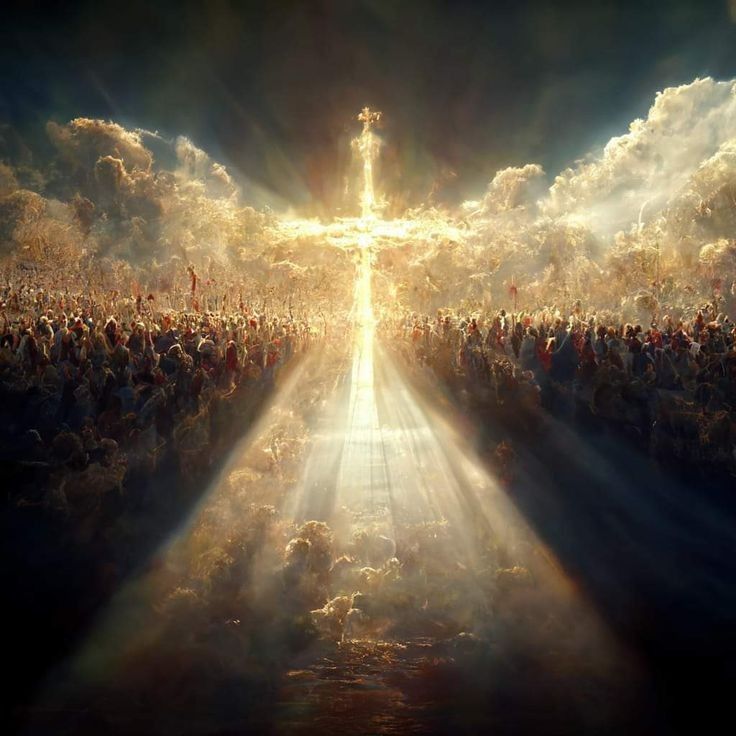
Modern doom-scrolling culture, driven by fear and desire, acts as an agent of spiritual amnesia. It distracts us from the Cross, offering pleasures that only deepen the pain. These anxieties are not the Cross—they are a refusal of it. Modern man flees suffering because there is no hope of resurrection, of a higher and unchanging life.[1]Modern man flees suffering, yet there can be no spiritual growth without it. And if Benatar is correct that life is predominantly conditioned by suffering, then embracing it is paradoxically the most life-affirming response possible.
Orthodox Christianity contrasts the modern resistance to suffering, seen in the writings of St. Sophrony of Essex:
“One cannot love without suffering. The greatest pain is that of loving to the utmost. Christ loved so much that He gave Himself up to a terrible death. The saints too. Paradise always costs this price. Prayer for the world is the fruit of extremely deep and acute suffering.”
Life is not predominantly suffering; it is love strained through suffering, offered up to God as a sacrifice and means to draw closer to Him. Fr. Dumitru notes “Almost every one of our efforts to spread goodness is accompanied by suffering and by a cross which we carry on account of the incomprehension of others. To wish to avoid suffering, this cross, would mean in general to renounce the struggle and the effort to do what is good. Thus without the cross there can be no true growth and no true strengthening of the spiritual life.”[2]
When life is reduced to a dichotomous experience of pleasure and pain one risks losing sight of what is important, and for my own part, suffering–like Kierkegaard remarks–keeps you focused. It is through suffering that our humanity is realized, and our empathy and compassion grows. The cross we carry grows in correlation with our understanding that we are all intrinsically connected as children of God.
The materialist may think the Christian is naive, crazy, or simply one who has unthinkingly adopted the traditions of their fathers, but the Cross is not to be justified–it is to be carried. Dr. Timothy Patitsas observes that true Beauty always bears a Cross. In my own suffering, I’ve found this to be true; in the Beautiful, that is the Resurrection, there is the Good, or the Cross.[3]
Patitsas continues drawing from this two-fold model wherein Christ offers the cosmic pattern of eros and agape where eros is the movement outward toward another in desire; agape is the gift of self-emptying love. The unity of which structures the entire universe in a fractal pattern where the Cross is agape and eros is the Resurrection.
Eros leads to agape, because “eros is sweet, but it is so sweet that it makes us deny ourselves, leave our ‘old selves’ behind. It, too, has a cross hidden in it… when eros leads on the cross of agape, the unity of the cross with the Resurrection unfolds… In empathy, co-suffering love, there is always eventually a fullness, a completeness. In loving another person self-sacrificially, we do feel some reassurance and joy.”[4]
Patitsas is hinting at the fundamental Orthodox expressions: joyful-sorrow, or as Metropolitan Hierotheos of Nafpaktos considers, the risen-crucified Pascha. The risen-crucified life is what the Christian is called to and this love that grounds the risen-crucified life–a life of joyful-sorrow–the co-suffering and self-sacrificial love both adheres to the cosmic structure, uniting us to Life Himself: Christ, and it is fundamentally counter-cultural.
The love that is given out with abandon reflects the very love God has for creation and is an embrace of the Cross as our destiny knowing that beyond the Cross is Truth and Life, “the way of the cross is the only way which leads us upwards, the only way which carries creation towards the true heights for which it was made.”[5]
The modern, secular world has made eros ugly and cheap; agape has been abandoned altogether, therefore, within the modern materialist paradigm, there can be no unity or cosmic structure. We cannot participate in Christ’s suffering without the Cross, but the Cross has become an offense: The wisdom of this age cannot comprehend Christ crucified, deriding it and the belief in it, but to what end?
Joyful-sorrow is an ontological disposition wherein we re-liken the image of God within us by participating in the redemptive work of Christ’s suffering for the world, and, indeed, giving His life for it. By rejecting the Cross and Christ we’re left with cosmic pessimism and self-enclosure.
The world, as God’s gift, becomes flat and a thing-in-itself, its true shape and dimensions unrealized beneath the disposition of hearts turned away from reality. Still, the secular world mocks Christ—and cannot fathom the Resurrection. But by forsaking God the world has not become a more “intellectual” or “advanced” locale. Suicidality is way up, gender is performative, language is violence–everything has become about power and will-to-power.
This is the consequence of relinquishing eros and agape; this is the cultural fleeing from the Cross and suffering. Materialism and naturalism have dulled the soul’s vision of Beauty, reducing the Resurrection and the Cross to mere metaphors—if not rejecting them outright. They have reduced human life to psychological and biological processes stuck on the pendulum swing between pain and pleasure.
The modern world does not simply flee from the Cross. It’s a culture clinging to escapism. Fragmented reality projected through screens and our own self-constructed identity.
This is an anti-liturgy. When things are things in themselves, nothing can be accepted with gratitude, nor can anything be offered to He Who gave. Thus, the pessimist is left with escapism reflecting Adam and Eve hiding in the Garden after eating of the fruit of the tree of the knowledge of good and evil.
So writes St. Maximus of the anti-worship, anti-doxological non serviam of treating the world as a thing in itself:
“And it would not be untrue to say that the tree of the knowledge of good and evil is the visible created world. For this world is by nature subject to that alteration which produces pleasure and pain.”[6]
The rejection of the world as a gift of God is denying His Theophany, a failure to recognize or acknowledge His self-revelation leading to idolatry, as Dr. Patitsas states, observing the pattern in St. Paul’s epistle to the Romans.[7] And in rejecting God’s Beautiful Theophany one is left with self-enfolding behavior and idolatry, the worship of created and of the self.
Escapism is, therefore, another word for entombment. It does not lift us toward God; it buries us alive.
Fr. Seraphim Rose, in his treatise on Nihilism, argues that the nihilistic worldview is the undercurrent for the spirit of the age; Fr. Alexander Schmemann builds on this, seeing the Western theological tradition breaking down into realism and nominalism following the Great Schism providing ample soil for secularism and secular Christianity to rise in the second millennium. Roscelin of Compiègne, the founder of Nominalism, denied the ontological grounding of universals, setting the stage for a slow, reductionist vision of faith, becoming a set of intellectual propositions and sentiments eclipsing the liturgical, participatory understanding of the cosmos and God’s grace. Henceforth, the desacramentalization of reality emerges as a bastard child, to use Fr. Alexander’s term for secularism, as a byproduct of this East-West divorce.
The Reformation grew from this fertile ground, watered by scholasticism and Enlightenment rationalism, producing an increasingly abstract, overly-theoretical, and disembodied faith. Protestantism, born of a rejection of the increasingly corrupt and geopolitical ecclesial authority, inadvertently intensified the fragmentation, pivoting from German Romanticism’s ideals, placing the locus of meaning within the individual’s mind. The inward turn and individual becoming the sole arbiter of reality and authority emphasized by solar scriptura and sola fide subtly prepared the ground for the epistemic isolation of modern man.
Fr. Alexander’s argues that the Western separation of signum and res—sign and thing signified—legitimated Kant’s transcendentalism, where reality is no longer something received but mediated entirely through mental faculties. Creation, through this lens, is no longer a gift but raw, sensible data structured by mean’s cognition.[8] Building on this, Schopenhauer takes Kant’s unknowable noumenon and identifies it as the irrational, blind will that underlies all phenomena. In his pessimism, freedom becomes the negation of the will. Freedom, for the pessimist Schopenhauer then becomes escaping from this world of appearances that, for him, is all suffering[9]. Thus, pessimism is not simply “the lowest form of philosophy,” as Eugene Thacker puts it, but is anti-liturgical.[10]
If non-existence is preferable, the life of the modern pessimist begins to mirror nothingness: through digital anesthesia, therapeutic sedation, and substance-based entombment. When unreality becomes the ideal, it begins to structure our reality. But entombment is not merely the symptom of pessimism—it is the modern condition itself. The temptation to exist is drowned in endless activity, which fixes us in retarded potential—never actual subsistence.
This is a feature not a bug. Almost-activities like video games and social media have become substitutes for what, in the past, was time spent thinking, praying, or serving others. Now, this time is spent focused on the self or nothing at all, widening the gulf between neighbors and God.
Such almost-activities serve as steam valve releases, easing the pressure built by modern relativism and philosophical dispositions just enough that we remain content and pleasure-seeking rather than questioning what, indeed, lies beyond our self-constructed realities and modernity’s-imposed existentialism.
The modern technological age has made philosophical pessimism a silent partner in the enterprise of dissolving man. The cosmic pattern revealed in and through Jesus Christ, the unfolding of eros and agape, contrasts the anti-liturgical spirit of the age, because in co-suffering and self-sacrificial love one is known to another; it is love that grounds our knowledge.
One cannot know anything as a pessimist other than they simply do not enjoy suffering but even knowing that non-existence is preferable to existence is conjecture, based on an unsophisticated metaphysical framework. Further, the existential and desperate self-construction of identity is not, cannot be, based on self-knowledge. Self-knowledge is relational. The self-constructed identity is love turned inward—self-enclosing, isolating, and ultimately disintegrating. It breaks man down into unstable, economic units making this worldview deeply problematic, anti-Christian, and anti-liturgical.
Ο ΧΡΙΣΤΟΣ ΕΝ ΤΩ ΜΕΣΩ ΗΜΩΝ! ΚΑΙ ΗΝ ΚΑΙ ΕΣΤΙ ΚΑΙ ΕΣΤΑΙ
[1] Stăniloae, The Victory of the Cross, 9.
[2] Ibid. 11.
[3] Timothy G. Patitsas, The Ethics of Beauty (Maysville, MO: St. Nicholas Press, 2019), 105.
[4] Ibid. 153.
[5] Stăniloae, The Victory of the Cross, 11.
[6] Maximos the Confessor, The Philokalia, Vol. 2, 175-176.
[7] Patitsas, The Ethics of Beauty, 163.
[8] Immanuel Kant, Critique of Pure Reason, trans. and ed. Marcus Weigelt, based on the translation by Max Müller (London: Penguin Books, 2007), 64-66.
[9] Arthur Schopenhauer, The World as Will and Representation, vol. 1, trans. and ed. Judith Norman, Alistair Welchman, and Christopher Janaway (Cambridge: Cambridge University Press, 2010), 311-312.
[10] Eugene Thacker, Cosmic Pessimism (Minneapolis, MN: Univocal Publishing, 2015), 3.
 Witness, NM
One response to “Under the Paschal Light pt. ii”
[…] Part ii […]
LikeLike