An end of the year reflection
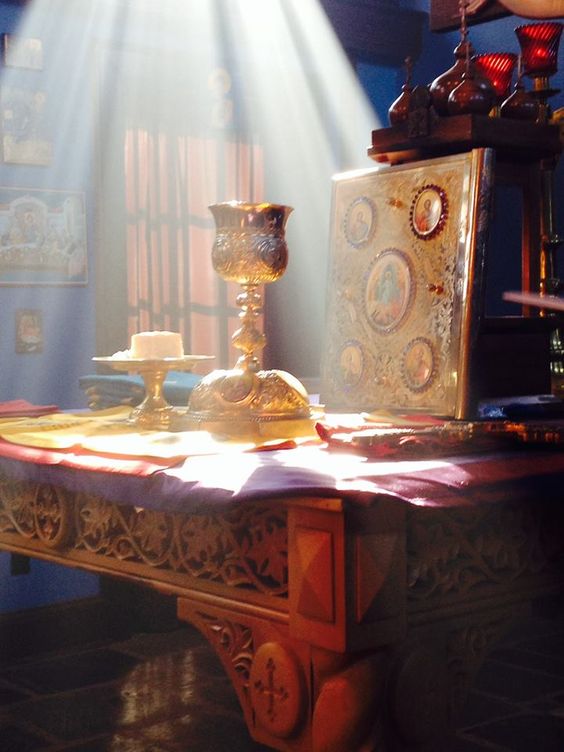
The Mysteries, or Sacraments, of the Church are not a magic trick nor can be understood through the Roman Catholic lens of transubstantiation. The bread and wine are not changed into anything; it is not a transformation that is taking place, rather, it is a revelation of the underlying reality that is always present. The Divine Liturgy raises this reality—the very Body and Blood of Jesus Christ—to the surface of our fallen, ergo dense, awareness.
The Liturgy and Mysteries of the Church are therefore not magical operations, but lenses through which we enter into the reality that is God’s Presence, Who is everywhere present and filling all things. Always.
We are coming to the end of the liturgical year with the days beginning to shorten we are called to remember that no matter how short the light of day, no matter how cold the long night feels the advent of the eternal Son rests somewhere in the deep darkness of the world’s soul and our own, too.
I wanted to end these final days of the year, in between the falling asleep of our most blessed mother, the Theotokos, and the beheading of the proto-martyr and angel of the desert, St. John the Forerunner, with a look at the Eucharist. There is nothing I can say that has not already been said, however recently things have been shifting for me in relation to this most sacred Cup and Mystery of the Church.
The Eucharist, like a reflecting pool, reveals us to ourselves because to partake of our God, Who makes Himself known by revelation the more He makes Himself known to us the more we come back ourselves in awareness.
In the days of the early Church there were reports made known to us by the Apostle, St. Paul, of members of the body of Christ dying having partaken of the Chalice without proper preparation. I believe it still does this; however, it happens in a different way than the physical death occurring in the early centuries following the revelation of this Mystery.
The Chalice burns the unworthy by bringing up for that which we do not want exposed. It does not suffer us or our passions but brings them to the surface where the Light of God and our neighbor bear witness to them. This is the fire of God and as our sins are brought to the surface through the furnace of refining us like gold. Here is where faith is continually put to the test through self-confrontation.
We who seek union with Him want what He wants, too, but for Him to abide within us is to reveal to us that which is not Him, everything that is within us that conforms to the things of this world, the things that we hide from God, others, and even ourselves through suppression.
All of this comes up to be purified.
It is unreasonable for us who cannot bear to look at the sun for too long with our bare eyes without incurring temporary, and sometimes permanent, damage to our body to think we can approach God and not also be burned in some way.
And I mean utterly destroyed.
When we say destroyed, though, what we mean is not being ourselves in the same way that we have been our whole lives: with all our unconscious states of being and sleep-walking through life. Scripture exhorts often to not be caught sleeping for it is akin to death. We no longer die like the early Christians who partook of the Body and Blood without proper preparation, fear and trembling. We die, passively, letting our life pass by, aggravated by minor inconveniences and frustrated by our learned helplessness and unconscious behaviors.
We die, in these most trying times, by never confronting ourselves enough by God’s grace to begin waking up and healing the all the wounds the world has afflicted upon us. We die when we are outside of God’s Light, for in that outer darkness, there is no knowledge of God therefore there is no knowledge of self.
This does not come without a price, though, because to become aware of oneself is to become aware of all the ways in which we sever ourselves from ourselves, from our neighbor, and certainly from God. There are growing pains that comes with becoming awakened to God and self. These growing pains we see in everyday life, like with my girlfriend, for instance, earlier this summer she began going to Physcial Therapy (PT) sessions for an old injury in her knee. These PT sessions brought her awareness, first, to how well she had been coping with this injury, dissociating or ignoring it in some way, and it was painful for her to become aware of the pain that was always there, but she had become numb to it over the years.
This is the same way our souls become numb, and our hearts become hard to our sins, to our passionate (fleeting) desires, and unconscious modes of being. We become entrenched in our sleepwalking and detrimental attitude toward sin. It can become so bad, and our awareness of so dim, that we actually begin to hate ourselves; we treat others poorly because of our limited self-knowledge, our dismissal of God, and evil self-concept.
The Eucharist, God’s grace, it reveals these things to us over time, to each according to their ability to sit and endure these revelations of self and God. In the same way that something like PT can become increasingly challenging when we really put the work in, eventually it gives way to a renewed, and improved, sense of being in one’s own body. Again, for the first time. The Eucharist’s revelatory nature can impose upon us trials through which we endure what comes up for ourselves, rather than ignoring it, numbing out, or re-suppressing (dangerous, very dangerous. I do not recommend) and grounding into God’s awareness.
God’s awareness, or His glory, is a consuming fire and it purifies and heals these bubbling imperfections by our willing participation in our sanctification. Put differently, we have to show up to PT and do the work during our sessions and outside our sessions. We cannot show up and expect our every problem to be solved on our first visit, nor can we expect our problems to be solved by putting in the work solely during our visit and not outside of it.
The Eucharist, therefore, is a call to deeper participation in the Mysteries of the Church, like Confession and Unction, as well as the lesser Mysteries like the blessing of the waters. The Eucharist must lead, and it does effortlessly when partaken with preparation, fear, and trembling, by God’s grace to an ever-deepening repentance: or self-revelation/confrontation and returning to communion with God. This is the life of the Christian living sacramentally in the Body of Christ, for as our God is known by His self-revelation so, too, are we known to ourselves in and through Him.
It is therefore not a trifling matter to participate in this blessed Mystery of the Church. It is a privilege which surpasses all privilege. It is not for the faint-hearted nor for those half-asleep, groggy on a Sunday morning types, because from my experience and witness, when this summit of the Christian hope is partaken of without preparation or as if it were a morning queue for coffee it will harden the hearts of those who partake of it.
For those of us stepping up to partake through this lens of enfoldment the grace of God cannot pierce their hearts as they will not allow it to thus giving them over to their own irreverence and darkness rather than making them like Him by grace. It is like becoming aware of something only to suppress it once more requiring an increased numbing agent leaving us worse than we were before, as if it had been better for us not to have stepped into any level of awareness to begin with.
The Christian, truly, must be willing and ready to confront themselves head-on, knowing that by doing so they are putting to death that which is associated with worldly cares, wounding, traumas, and resentments. The drives which come from our hearts, unconscious to our awareness yet controlling us more than anything. We must hold steadfast to a life of self-revelation/confrontation: a life of ever-deepening repentance. Warring with the giants and dragons of our souls knowing that God is with us. It is in and through Christ, the Eucharist, that we are revealed to ourselves and made God’s own.
Woe to us who harbor such resentments like myself, for that is a part of us that must be purified through the furnace: all that has been suppressed must come up and enter our awareness, like how we think and behave, how that affects others and has affected us our whole lives without our realizing it, how our communion with God is strained by our inability to forgive, to be compassionate, and to meet others with love in truth.
Just as my girlfriend’s PT sessions revealed hidden pain and led to healing, so too does the Eucharist reveal our inner wounds, calling us to deeper transformation. She treated her PT sessions seriously and was resolute to facilitate her body’s healing journey with patience and tenacity. This patience and tenacity is the same that we must assume when engaging with this most sacred Cup, which is to say, we must take it home with us.
Ο ΧΡΙΣΤΟΣ ΕΝ ΤΩ ΜΕΣΩ ΗΜΩΝ! ΚΑΙ ΗΝ ΚΑΙ ΕΣΤΙ ΚΑΙ ΕΣΤΑΙ
 Witness, NM