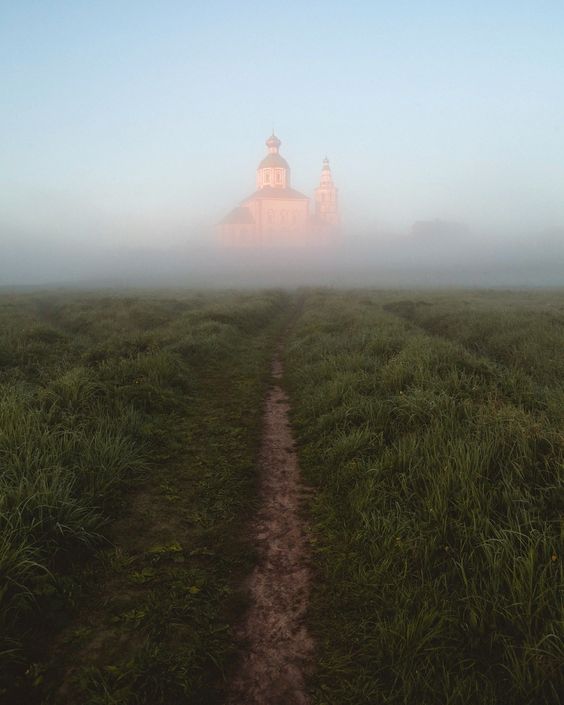
Finding peace in a peaceful world
“In time past, when heresies prevailed, many chose death through martyrdom and various tortures. Now, when we through the grace of Christ live in a time of profound and perfect peace, we learn for sure that cross and death consist in nothing else than complete mortification of self-will. He who pursues his own will, however slightly, will never be able to observe the precepts of Christ the Saviour” (St. Symeon the New Theologian, The Discourses XX).
I really have no idea how to be a Christian. I thought that perhaps the Mystery of Holy Chrismation would make me more realized, but it feels the opposite. I feel less defined and the only realization that has come forward is my understanding of the gulf between myself and God.
All that has been revealed is the sins that have fallen behind me my whole life, now falling before me.
It was easier to claim to be a Christian and the live the gospel in the violent days of persecution, not to say martyrdom is a cake walk, but it’s just that—if we understand that we are born in the times best suited for our salvation—it feels somewhat impossible.
Living and obeying the gospel is so difficult. For those of us who truly want to live it, how can we?
St. Symeon lived a little over one thousand years ago and while I believe the world was a little less peaceful during his time it certainly was not as violent as the 2nd century Roman Empire. The world, now, is far more peaceful than when St. Symeon wrote the above words. It may not always seem like it, but if we can unplug from the matrices of division, distraction, and worldly noise there is a profound and perfect peace underneath it all.
Therefore, the cross and death are entrenched in the practice of mortifying the will. The practice of aligning our wills with the will of God. Maybe we need to be patient to realize what that is or maybe we know what it is but need His strength to endure it or carry it out.
One thing is clear, it is a lot easier becoming a Christian (regardless of how difficult the process was, at first, de-throning the self and establishing God as King over our lives) than it is to practice a life in Christ; mortifying self-will, becoming obedient unto God, dying to the self, daily—becoming sons and daughters by the re-likening of the image of God within us. Choosing God every day and in all things, being continuously saved by His grace in becoming united to Him.
It must be my own addict—either/or, black-and-white, sniffing out the next high type thinking. It must be the way that most of us function. It is why we chase and chase after higher emotionally charged states of ecstasy. It is why the Baptist alter call is so appealing, the lights and smoke shows of Calvary chapel, the believer’s (re)baptisms, etc. We want those exhilarating moments of public profession of faith, the demonstrable declaration of repentance and wanting to follow Christ.
The Mystery of Baptism and Chrismation (or Confirmation) are works of God therefore of course they feel good! And are good! It feels good preparing and anticipating for something so powerful, the very Mysteries of Christ’s Church. It feels good. Even when, during those times of preparation, we are tempted to turn away from the Baptismal font or holy chrism: wrestling with God, fighting the evil spirits, taking the ox-goad to our fleshly and earthly desires, all while purposefully moving toward Him. That feels good.
Plus, something is happening!
Tangibly, something is happening.
The challenge arises in the days, weeks, and months following this courtship. IF one is married then they know that it is the days and years leading to a marriage–another Mystery–that excite us, but then the work really begins after the honeymoon. God does court us, yet it is we who feel the loss of His Presence on the other side of our public demonstration of our faithfulness to Him. The issue is our way of seeing the process of union, we are not made perfect in Baptism or Holy Chrismation; a couple is not made perfect in marriage.
A couple is strengthened and made perfect through marriage.
Through Baptism and through Chrismation, an individual is equipped with the ability, strength, and support to deepen their relationship, their faith, and their repentance.
If we understand repentance through the lens of sobriety and recovery then we see that it is not the moments where we collect our two-year chip that our recovery is built on, nor is it built on our relapsing and getting sober, again. These things are, of course, important and part of it, but it is in those quiet, lonely moments when we experience profound and perfect peace that the old man whispers in our ears, that our flesh—habituated to turbulence—gets restless, where the only thing that seems likely to calm the painful presence of peace is a storm we can create.
In those moments, that is where recovery and repentance are deepened, because that is where we are able to, by God’s grace, to step into the unfamiliar, and uncomfortable, peace and slowly conform our destructive inner world—conscious and unconscious, voluntary and involuntary—to the peace around us.
This is the constant work of a Christian: to align oneself with the peace of God that is found most easily in the still moments that are just as easily run away from. The deepening of our union with God is allowing those moments of our lives to be opportunities where God sits with us, where we are transformed by His abiding with us, compassionately, in our truth. That is what God wants, the courtship was not a put-on to get you into a church to tithe and so on; God courts us so that He may enter into our deepest wounds, the very Hades of our soul, to bring light, healing, and compassion even there.
This can only happen when we confront the profound and perfect peace that God grants us by His grace. When we let go of the ever-present distractions, divisions, and displacement of our attention that we seek for their comfort and familiar destruction of a peace unfathomable.
The cross and death of a Christian in this modern world emerges from our willingness to lie our passions, burdens, and additions down to truthfully enter into the depths of our souls with the peace and light of God. His courtship is meant for us to be completely united and realized in Him, nothing less will do for God.
Yes, it was much easier for the early Christians to lay their lives down in martyrdom than it is for us living, now, because we are tasked with laying our lives down in a different sort of sacrifice, without tasting the end of our trials and eternal rest. We are tasked with carrying eternity in this lifetime by mortifying our self-will and aligning all our heart, all our soul, with all our mind, and with all our strength to God’s commandments.
It is easier to love our neighbors as ourselves in times of struggle, persecution, crises. I mean, if the Albuquerque secret police were hunting Christians my whole community would be very much on my mind in prayer and deed. However, it is rather very difficult to even think of our neighbor when there is peace and we are, mostly, relatively, comfortable. It is difficult to love our neighbor in cultures of consumption because the fruits of such societies are self-will, pride, and resentment.
This is precisely why we cannot lose any moment of this life judging others, for it is not ours to judge, but to love. When we give into judgment we are giving into the things of this world, re-instating ourselves on the throne of our lives and, implicitly, lording over others as if what we are and what we do is what they ought to be and do, themselves.
Yes, we must turn away from living sin, but to waste any time judging others for doing what we have learned and been instructed not to participate in is demonstrating our own repressed feeling toward such behavior. The more we hate, the more we judge, the more likely it is we will give in to what has stolen our attention and energy. We do not obey God because we are afraid of what will happen if we do not (that is how repression occurs), we follow Him because He loves us, and we love Him.
I digress.
The Romans, for better or worse, are not coming to force us to publicly apostatize under threat of death. Truly, our own comfort allows cobwebs and dust to adorn our forgotten cross taking up space in the corner of our rooms. Comfort grieves the Spirit to the point where foreign doctrines such as “once saved, always saved” are simply readily-consumable products of our time, a time of profound and perfect peace.
We must die to this world of peace by confronting it lest we overflow with forgetfulness of God, hatred of our neighbor, and idolizing comfort. The peace of this world is akin to anesthesia, lulling us into a deep, lifelong sleep ignorant of the Christian vocation of deepening repentance, love of God (our Baptismal vows), and love of neighbor.
I am an alcoholic.
I am an addict.
So, while I may be academically stunted, I know firsthand that peace is not comfortable. I would just as soon relapse and set my house on fire (if I had a house) from boredom and familiarity with self-destruction than to sit and allow God’s peace, which is not of this world, to aid me in the transformative experience of descending into the unknown parts of myself, connecting with God’s unfathomable love that is mirrored in all of us.
We become Christians over time, slowly allowing God to burn the dross of our wretchedness, defiled flesh, and darkened mind to see clearly who we are in Christ’s glory. That’s worth a thousand house fires.
It feels exhilarating to enter a life in Christ, particularly through the Mysteries of His Holy Church. And it should be (and it is!), but then the work really begins. It is a fault of many churches that do not have a support system after the incredible experience of entering into the life of the church and Body of Christ that leaves many people on the other side of the threshold without an idea of what to do next. The Christian life is one of recovery that is an everyday work.
God’s Mysteries are a work of God, not of men, and “we are His workmanship, created in Christ Jesus for good works, which God prepared in advance so that we should walk in them” (Ephesians 2:10). By our transformation in Christ and His work of love abiding in us, the fruit of our faith is born for witnesses. There is no more need for a public demonstration of our faithfulness such as in the Mysteries of the Church, but now we are energized by the Holy Spirit that our faith may produce works, thereby perfecting faith (James 2).
Can we carry our cross and find the Way to crucify ourselves and mortify our self-will every day?
This is the continuation of our Baptism and Chrismation, that by working with God His work may become manifest in and through us.
We found a way to submit to the things of this world for as long as we did, every day, before entering into deeper faith and commitment to Christ our God. We thought it was us being in control of our lives, independent and self-determined, but it was enslavement to the conjured chaos and distraction in our time of profound and perfect peace.
We are to die daily.
And no, it is not as action-packed as a Baptism or alter call. Dying daily is like… it’s like not drinking when you first get sober. Yeah, sounds simple enough. Mortification of self-will, carrying the cross, crucifying the mind and desires of the flesh (OK, a little trickier than not drinking), but there is so much more involved. There is just so much deafening peace and quiet that it feels like you’re going to go crazy. It is difficult and it is not sexy, it is hard to sell, and everything else is easier (including dying physically for one’s faith).
Everything looks so much better and easier than sitting inside and… not drinking; everything looks much easier and more appealing than sitting in the dreadful silence and allowing God to reveal who we are to ourselves, which is brilliantly painful. Cultivating the inner stillness takes time, effort, and excruciating attention to our faults, our sins, our passions, our addictions and then giving them to God in exchange for His love, His compassion (all freely given, by the way, we have to let these things go not as a transactional exchange, but as a means of coming to realize the abounding Presence of He Who already is with us), and His peace.
A peace that is not of this world.
This peace, His Presence, is found here and now; a better life, a sober one, one in recovery, and one in union with eternity are found by confronting the profound and perfect peace all around us, sit in the uncomfortable stillness, and allow our loving God to reveal Himself to us just as we ourselves are revealed in Him.
This is living prayer. This is becoming a Christian; may we all be blessed to know how far short we all fall before His glory, that we may never tire of re-learning how to be still and carry our cross, mortifying our self-will within the frightful and profound and perfect peace.
Ο ΧΡΙΣΤΟΣ ΕΝ ΤΩ ΜΕΣΩ ΗΜΩΝ! ΚΑΙ ΗΝ ΚΑΙ ΕΣΤΙ ΚΑΙ ΕΣΤΑΙ
 Witness, NM