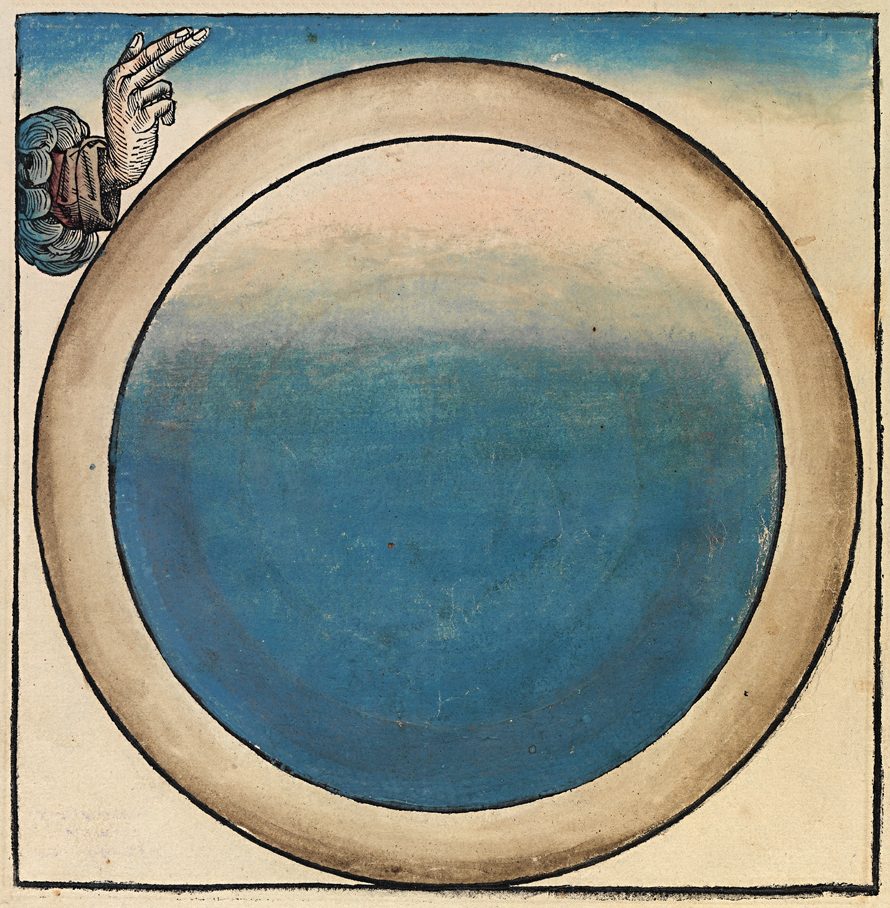
Paschal Reflections on Creation
“In the beginning, God made the heavens and the earth. But the earth was unseen and unprepared, and darkness was upon the deep. And the spirit of God rushed upon the water. And God said, ‘Let light come into being.’ And light came into being. And God saw the light, that it was good. And God made a separation between the light and darkness. And God named the light day and the darkness he named night. And there was evening, and there was morning, the first day” (Genesis 1:1-5).
I was going to write something on St. Mary of Egypt as this past Sunday the Orthodox Church commemorates her as the model of repentance, however I got sick and then finals week happened so while repentance is fundamental to the Christian experience as well as actually integral to the Paschal mystery I thought we could look at the First Day of Creation, reflecting on it as a revelation of God, the mystery of Christ, and being a type of Passover.
The First Pascha.
I have been using the pattern established in the days of Creation to contemplate the cosmic mystery of Jesus Christ. Where we begin is an order of theology, which in the Orthodox Church begins with the Trinity: The Trinity is the supreme authority demonstrated in the first day of Creation whereby we, as Christian, see the First Cause of Creation in the monarchical rule of the Trinity. This is the first revelation of God and from reading it we have a type of soteriological lens that can be applied to the narrative of the Gospel.
What comes to mind reading the above Scripture are the words of St. John the Forerunner and Baptist who said, “I baptized you in water, but he will baptize you in the Holy Spirit” (Mark 1:8).
Fire and water, the baptism of water and the baptism of the Holy Spirit.
Fire and water.
The First Day.
God reveals Himself to be the supreme fount of Creation. He and He alone are the Creator, the Maker of all things, beginning with the heavens followed by the earth. Fire and water. The heavens signify a fiery reality, the first revelation of His divine energies, or energeia, at work in space. The heavens representing fire also demonstrates God, the Heavenly King, to be a consuming fire, descending from the heavens and fashioning earth, His Spirit passes over the darkness of the water. It is an immediate descent and revelation of God’s Being in Creation.
But the earth was unseen and unprepared, the emphasis on unprepared meant to signify the interdependence of the Trinity, man is earth and man is unprepared to receive the Word of God therefore man must be, in a manner of speaking, tilled, the soil of a man’s heart must be plowed that the seeds of the Word of God can find a prepared place to rest and from there take root and sprout.
So, the Spirit passes over the darkness of the waters then shows a type of baptism, before God creates the world His Spirit passes over the void, empty water of the earth. This is a prescriptive Paschal revelation, where we as the earth, as Creation, are void and empty—dark—without baptismal (re)generation.
It is, in a way, alluding to the impending Fall of Man where humanity, in their disobedience become deprived of grace with a tendency toward the darkness, as death enters into the world.
It is important to note here that it is not man’s nature to be sinful, nor is it man’s ontological nature to be mortal, yet the Fall imbued humanity with mortality. This is the darkness of the unseen and unprepared earth before the Spirit passes over.
Another meaning of the word Pascha is “passage”, and this can be understood as Christ’s Resurrection secures man’s passage from this life to eternity and in the Orthodox worldview, we lay hold of this right of passage through the waters of baptism.
The remission of sins is a byproduct of baptismal regeneration, its purpose is to establish the individual in the immortality that Christ’s has restored through His death and Resurrection.
And so, through the passage of the baptismal waters man is brought to an illumined state; in terms of the new birth, man becomes re-born and thus brought into the mysteries of the Church, i.e. the Sacraments. The Frist Day of Creation reveals a type of illumination following this type of baptism by water and Spirit, the baptism of fire, bringing forth Light.
On the First Day, the Trinity is revealed: The Father as the First Cause, arche, the Spirit passes over the void and the Word goes out from the Father and brings Light to Creation.
The Spirit tills the soil, preparing the seeds of God’s Word.
The story of Creation is the Parable of the Sower.
Now, what might be missed in God’s Creation of space, then time, by the Light divided from the darkness creating Day and creating Night is the significance of the First Day wherein earth, baptized by the Spirit and illumined by Light is showing a type of glorification. God glorifies the earth by His Word and then by that glory, it was separated from the absence of glory.
Night and Day.
The Scripture is careful to show that God made light and divided it from the darkness, for He did not make the darkness; God does not create the absence of God and here this alludes to the coming Fall, where Man chose darkness rather than light and why there is even a need for the Paschal mystery.
And this mystery is revealed to us by the Creation of time and space.
God has, by fixing time and space, created a container in which structure and order comes to fruition by His very glory. It demonstrates cognizance, of course, but more so it reveals a quality of Divinity, a divine attribute we as man can comprehend. And by our comprehension can, in some way, relate to and accord ourselves to. It is an actionable revelation of God.
Furthermore, we that, in the beginning, God creates a pattern of existence, moving from darkness to light, in Christ, through the baptismal waters wherein the Holy Spirit indwells us.
The Paschal mystery begins with God creates life from the void, He passes over the darkness of the deep and made light; we humans go from living amidst the passions, void and empty, then to death represented by the darkness of the deep, but by His Spirit we then move to resurrection represented by the Creation of Light, the illumination of the earth. The glorification of man in Christ’s ascension. And God saw that it was good.
St. Mary of Egypt is a model of repentance, a patron of the penitents, living a life controlled by the passions, prostituting her body out and even refusing payment from the men she was with, rather begging for a living. She lived that way for seventeen years before turning away from her debaucherous lifestyle, converting, and beginning an ascetical life dedicated to God.
She renounced worldly desires and surrendered to the very Theotokos who leads all souls to her Son, the very Word of God.
St. Mary of Egypt is a great saint to reflect on with Creation in mind, because the first day is a type of Exodus, a type of circumcision, a type of being brought up from the land of Egypt by the descent of the Spirit, leading one to Jerusalem. God brings all His people out from the land of darkness; Egypt being literally called the Black Land because of the dark soil.
St. Mary of Egypt shows us that there is no point where we cannot turn around and have an actual change of heart, a real conversion, a real metanoia of the soul. The First Day shows us that this is the pattern for us all.
This is the mystery of Jesus Christ.
This is the mystery of humanity, all of us who meet Christ and accept the transformative power of the Paschal mystery and enter into by the Sacraments of His Holy Church which leads us to direct knowledge of God, moving glory to glory, from the darkness of passions, wickedness, and death to the illumination of the Incarnation and His Resurrection.
We are glorified by God through baptism, and it is from passing through the waters that we are able to produce. As we see in Creation, before vegetation, before there was a moon, the sun, the stars, or creatures Creation was deemed good, and it was glorified. Not to say that vegetation and the stars are also not good, but there was never a time in Creation that anything was not good. Thus, it is through the energizing glory of God that Creation begins producing.
It is important to our own understanding of humanity’s relationship with God, because man is unable to do anything by himself; this is what led to the Fall, man trying to become God without God: man can do nothing to make himself glorified.
Therefore, it is not the works we do that glorifies us, but our faith that glorifies God which in turn glorifies us, separating us from the absence of grace.
Through baptism we are brought into communion with God, we are brought into His life, His death, and His resurrection. We are brought into His glory by the reflective patterning of the Spirit hovering over the deep, pointing recursively to the Trinity as well as interpenetrating the surface of the waters, changing them.
The Spirit brings them forth in a manner that they are capable of being illumined by the Word of God and thus the Word speaks light over the interpenetrated earth and light is.
Thus, the glory of God enables us to participate fully in that glory, energizing our fruits. Without faith, or the glory of God, works are dead, empty, void.
This is because only God can create ex nihlio; Man cannot do anything on our own, but by God. It is the glory of God, His divine energies, which brings forth good works. This is the energizing agent creating the constellations, the planets, fixing them in time and space which was created on the first day.
In the beginning God creates time and space and transcends them and is immanent within them.
The limitless and limited; God and Creation, the heavens and the earth. The marriage of the dichotomy, the holding of the tensions between opposing forces is Christianity and as such shows us the perfection of God, Who is Creator as well as offering us an order of worship, of praise, what is due honor, and an order to which it is due.
Praise ascends from Man and glory descends from God. We are in communion; the heavens and the earth are made for one another.
The Hebrew word for faith:
אֱמוּנָה
Enumah. It is a verb; thus, faith is a conviction leading to action. The first day of Creation typifies the relationship between God and Man, fully realized in the Incarnation, glorified by His resurrection. Enumah, actionable faith, is defined further as a fidelity, a steadfastness, and a firmness.
That very firmness will be the topic of the Second Day of the Paschal Mystery of Creation…
Ο ΧΡΙΣΤΟΣ ΕΝ ΤΩ ΜΕΣΩ ΗΜΩΝ! ΚΑΙ ΗΝ ΚΑΙ ΕΣΤΙ ΚΑΙ ΕΣΤΑΙ
 Witness, NM