Forgiveness Sunday
“For if you forgive others their trespasses, your heavenly Father will also forgive you, but if you do not forgive others, neither will your Father forgive your trespasses.
“And whenever you fast, do not look somber, like the hypocrites, for they mark their faces to show others that they are fasting. Truly I tell you, they have received their reward. But when you fast, put oil on your head and wash your face, so that your fasting may be seen not by others but by your Father who is in secret, and your Father who sees in secret will reward you.
“Do not store up for yourselves treasures on earth, where moth and rust consume and where thieves break in and steal, but store up for yourselves treasures in heaven, where neither moth nor rust consumes and where thieves do not break in and steal. For where your treasure is, there your heart will be also” (Matthew 6:14-21).
Let us, none of us, continue deceiving ourselves by assuming we have no sin, that we are not burdened by sin, nor that we have a sinful nature.
We simply cannot afford such a charade and God does not suffer deceit, “Lying lips are an abomination to the Lord” (Proverbs 12:20). There is no such place in the Kingdom for self-love, for puffed up vanity, and minds of ill repute, constantly seeking to quarrel with their neighbor over the smallest perceived infraction. There is also no place in the Kingdom for those of us who look at the past of others and judge them while forgetting our own sins runneth over.
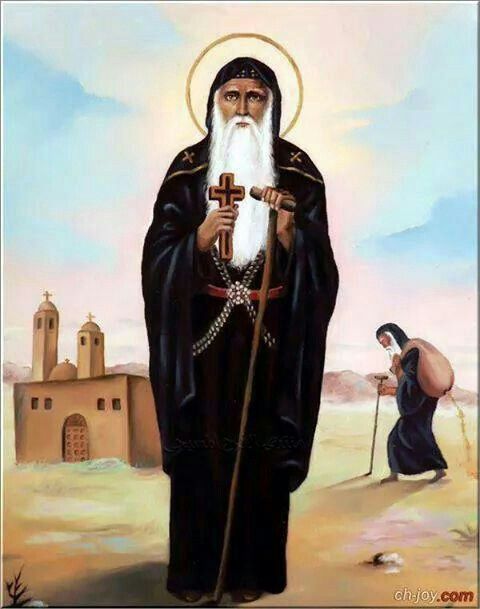
“A brother at Scetis committed a fault. A council was called to which Abba Moses was invited, but he refused to go to it. Then the priest sent someone to say to him, ‘Come, for everyone is waiting for you.’ So he got up and went. He took a leaking jug, filled it with water and carried it with him. The others came out to meet him and said to him, ‘What is this Father?’ The old man said to them, ‘My sins run out behind me, and I do not see them, and today I am coming to judge the errors of another.’ When they heard that they said no more to the brother but forgave him” (The Sayings of the Desert Fathers 138).
Forgiveness Sunday is the last pre-Lenten day before the Lenten spring begins in the Orthodox Church, and it is on this day, during Vespers, that the prayer of Saint Ephrem is recited with prostrations by the repentant faithful:
“O Lord and Master of my life, a spirit of idleness, despondency, ambition, and idle talking give me not.
But rather a spirit of chastity, humble-mindedness, patience, and love bestow upon me Thy servant.
Yea, O Lord and King, grant me to see my failings and not condemn my brother; for blessed art Thou unto the ages of ages. Amen.”
Grant me to see my failings and not condemn my brother. Permit me, O Lord, to see my sins and not think of myself as greater than my brethren. Allow me, O Lord, to see myself for who I am: a sinner. Let us embark on this Lenten journey with full hearts, clear eyes, and a trusting soul in the compassion of our Lord.
We do this recognizing that Christianity is a team sport, we may be judged alone, confess alone, and it is up to us to work out our salvation with fear and trembling, alone. However, we are surrounded by a family, we are not alone in our efforts, but strengthened and supported in the individual race we all run, together. Forgiveness Sunday reminds us that our neighbors are right here with us, in the pews, in our homes, at work, and…
Yes, even our next door neighbor who tends to avoid eye contact with.
We have been looking at Scripture instructing us in how to pray, how to repent, and the nature of our loving, compassionate Father, Who is longsuffering in His forgiveness for us all. He awaits the penitent with open arms, like a father, and more than a father, with perfect love for His children.
The Sunday of the Last Judgment reminds us that we are all made in His image, therefore we must treat the least of our brethren with absolute compassion and love, just as Christ has loved us. We do not consume God’s love like vacuums hoarding it for that final day of reckoning as if we could use it as a get-out-of-jail-free card, or even to tip the scales in our favor ascending through the Theologoumenonic toll houses.
God’s love is a free gift that, in turn, is a gift that we extend to others.
Forgiveness is a microcosmic crucifixion.
We are bridging the gap between heaven and earth through forgiving our brothers and our sisters, the esteemed who we cannot stand, the least of our brethren, and our enemies. Christ did not die for the sins of the few, or those He deemed worthy, for who is worthy in the sight of God?
“As it is written:
“There is no one who is righteous, not even one;
there is no one who has understanding;
there is no one who seeks God.
All have turned aside; together they have become worthless;
there is no one who shows kindness;
there is not even one” (Romans 3:10-12).
Christ’s sacrifice was for all. Christ’s victory over death was for all. Christ’s love for the world is for the entire world. St. Irenaeus wrote, “For the glory of God is the living man, and the life of man is the vision of God.” The living man is Christ Himself, and the life of man is beholding God through Christ. Christ’s love for all means He seeks to bring us all into Himself, into the life of God through participation in His nature.
Christ Himself, thus, seeks for us all to be deified. This is theosis and this is the reason for the Incarnation. This is the explicit point of the Christian life. And this is where the rubber meets the road in terms of our life in Christ and the salvific process of theosis. Wherein we acknowledge how far away we are from God, acknowledge our own sinfulness, and instead of falling into despair seek forgiveness in Christ.
Trusting and leaning on the compassion of God’s love.
And then becoming God’s love.
Christ is the living man, and we are invited to become this living man by our actions here in this life, beholding the image of God in each other and invoking that eternal Presence through meeting our neighbors with love and forgiveness. This is a divine art of self-denial: forgiveness, dying to the self–truly, crucifying the self and actually becoming a vessel of God’s compassion.
This is the love of God, and that love spreads like wildfire, for our God is love (1 John 4:8) and our God is a consuming fire (Hebrews 12:29). The kindling is one who has humbled themselves; the fuel for the love of God is one immersed in the suffering of Christ, which is self-denial. This is the kenotic love that Father has for Son and Son for Father, that love embodied in the Holy Spirit that is inflamed in those of us walking in the ways of God.
“The sacrifice acceptable to God is a broken spirit;
a broken and contrite heart, O God, you will not despise” (Psalm 50/51:17).
The sacrifice of Christ, crucified, is embodied in our forgiving others’ their trespasses. The sacrifice of Christ, crucified, is embodied in our asking others for their forgiveness. When we carry others’ trespasses while we try walking with God it leaves very little room to bear witness to His Presence that permeates the cosmos.
The only way we can walk with Him while not being a stumbling block for our brethren, especially those we might feel superior to, is to consider our sins in light of God. If we can practice contrition as a matter of course then I believe God will keep us on it.
Lent begins this week for the Orthodox, so whether it is the beginning or whether one is following a Western Lent this is the time to practice being a sinner.
Indeed, it is always the time to practice being a sinner, taking notes from the water-soaked trail of St. Moses the Black, acknowledging that whatever time we spend assessing the sins of another is time lost that could be spent in self-examination. Yet, we spend it in self-condemnation.
This is the time, my friends, to awaken from the cold slumber of condemning others for their transgressions, their debts, and their sins. The Apostle writes,
“Besides this, you know what time it is, how it is already the moment for you to wake from sleep. For salvation is nearer to us now than when we became believers; the night is far gone; the day is near. Let us then throw off the works of darkness and put on the armor of light; let us walk decently as in the day, not in reveling and drunkenness, not in illicit sex and licentiousness, not in quarreling and jealousy. Instead, put on the Lord Jesus Christ, and make no provision for the flesh, to gratify its desires…
“Welcome those who are weak in faith but not for the purpose of quarreling over opinions. Some believe in eating anything, while the weak eat only vegetables. Those who eat must not despise those who abstain, and those who abstain must not pass judgment on those who eat, for God has welcomed them. Who are you to pass judgment on slaves of another? It is before their own lord that they stand or fall. And they will be upheld, for the Lord is able to make them stand” (Romans 13:11-14/14:1-4).
Now, it is the time to practice being a sinner. It is time to awaken to our motivations and consider with whom the self walks: is it with the light or is it with darkness?
The practice of being a sinner will help us to throw off these works of darkness, for in this practice we acknowledge our own weaknesses. This practice will hopefully reveal to us how manifold our own sinful nature begets spiritual drunkenness, idolatry, and vainglorious prayer.
Let us pray that God take away the spirit of despondency, idleness, ambition, and idle talk that He may grant us the spirit of humble-mindedness, chastity, patience, and love. Let our fasting begin, or continue, with the latter spirit, seeking God in all we do and remembering that all is from Him. We are granted the spirit, just as Christ sends the Comforter to set a blaze in the hearts of the faithful, grafted into His Body as extensions of the Kingdom of Heaven.
May we welcome each other with love, see another with the eyes of God, as ambassadors of the Kingdom and image-bearers of the Trinity; and may we see ourselves as but dust. For we are merely sinners, and every grace is a gift of God, so let us not think so highly of ourselves as to walk in our ways, but in His. As the Apostle writes, “I appeal to you therefore, brothers and sisters, on the basis of God’s mercy, to present your bodies as a living sacrifice, holy and acceptable to God, which is your reasonable act of worship” (Romans 12:1).
Forgiveness Sunday is the last act before Great Lent, a time to remind ourselves that the fire of God is fueled by our contrition and recognition of our brokenness, our sinful nature. The flames of the pyre are ignited by our seeking forgiveness and forgiving our brethren, each of us putting off the old man and putting on Christ Jesus in an eternal invocation of heaven on earth. Let us forget the world and our vainglorious want to be recognized for pious fasting. Surely, that is reward enough, but a greater reward awaits those who wash their faces and do all things with God in mind. Fasting in secret and forgiving others as freely as God gives us His love. For our Father, Who is in secret, reveals His Presence through His Son, Who manifests in the hearts of the humble, the contrite, and the forgiving.
“O Master, Guide to wisdom, Giver of prudent counsel, Instructor of the foolish and Champion of the poor, make firm my heart and grant it understanding. O Word of the Father, give me words, for see, I shall not stop my lips from crying out to Thee: I am fallen, in Thy compassion have mercy on me” (Kontakion).
Si comprehendis, non est Deus
 Witness, NM