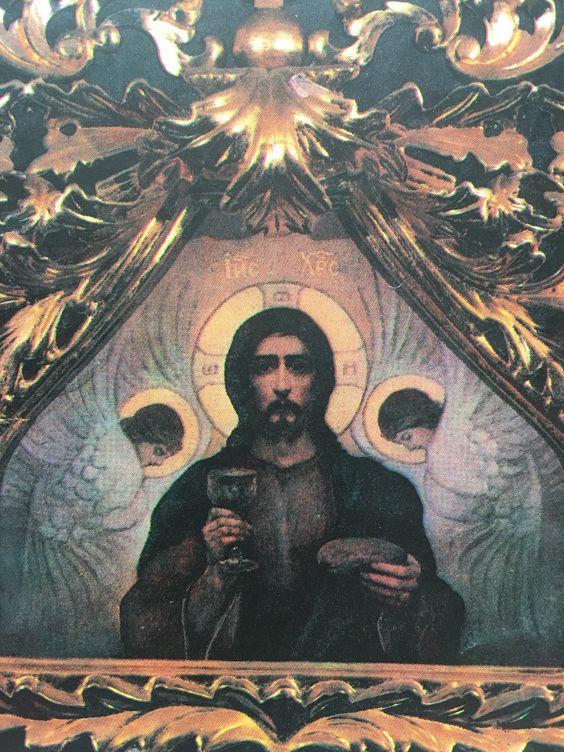
The Second Sunday of Lent
“Then he began to teach them that the Son of Man must undergo great suffering and be rejected by the elders, the chief priests, and the scribes and be killed and after three days rise again. He said all this quite openly. And Peter took him aside and began to rebuke him. But turning and looking at his disciples, he rebuked Peter and said, ‘Get behind me, Satan! For you are setting your mind not on divine things but on human things.’
He called the crowd with his disciples and said to them, ‘If any wish to come after me, let them deny themselves and take up their cross and follow me. For those who want to save their life will lose it, and those who lose their life for my sake, and for the sake of the gospel, will save it. For what will it profit them to gain the whole world and forfeit their life? Indeed, what can they give in return for their life? Those who are ashamed of me and of my words in this adulterous and sinful generation, of them the Son of Man will also be ashamed when he comes in the glory of his Father with the holy angels” (Mark 8:31-38).
I started reading the Bible during my first year of sobriety, when I was ankle deep into recovery and the waters of magic. I saw the Bible as a premiere spiritual text which could help me on my path of self-transformation. I put myself into the text, into the narratives and stories; my sober eyes and magical imagination allowed me to see myself as this burgeoning people called Israel. I saw myself in the Fall of Adam and Eve. I saw myself fleeing the captivity of Egypt, being led by the Moses of my heart.
I saw myself being tempted to return back to the familiar bondage under Egyptian rule. I saw myself wandering the wilderness, faced with temptation to return over and over again. Temptation to return to my familiar prison and temptations to turn away from the spiritual path and embrace the things of this world. I saw myself in every figure and through Scripture I was realizing myself.
The Word of God written was showing me who I was, who I’d been, and was drawing me in to direct me to who I could become.
Who could I become?
Then, reading the New Testament, I realized that everything in the Old Testament, everything the nation of Israel encountered and goes through under their covenant with God is perfected in and through the Incarnation of Jesus Christ. The Godman. The θεάνθρωπος (Theanthropos).
Israel’s history up until the Incarnate Word is a history of violence, of a divided nation (Book of Kings), the faithless killing the faithful, prophets brought to the people to call them back to God and being killed, civil war (Book of Judges), and idolatry. This is a nation that has fallen into sin, over and over again.
Jesus Christ takes Israel’s sin into Himself, knowing no sin, this enfleshed Israel reconciles the divided nation back to God through His Incarnation. Through His covenant. Through His suffering on the cross, arms outstretched drawing in the nation of Israel and uniting Creation by His Spirit. As the Apostle writes in his letter to the Galatians, “There is no longer Jew or Greek; there is no longer slave or free; there is no longer male and female, for all of you are one in Christ Jesus. And if you belong to Christ, then you are Abraham’s offspring, heirs according to the promise” (Galatians 3:28-29).
What we think we are, no matter our nationality, no matter our occupation, no matter our gender we are all one in Jesus Christ, but what does that mean? What does it mean to be one in Christ Jesus?
The Second Sunday of Lent’s reading from the Book of Genesis shows us our father Abraham being called by God to offer his son as a sacrifice unto God.
“After these things God tested Abraham. He said to him, ‘Abraham!’ And he said, ‘Here I am.’ He said, ‘Take your son, your only son Isaac, whom you love, and go to the land of Moriah and offer him there as a burnt offering on one of the mountains that I shall show you.’ So Abraham rose early in the morning, saddled his donkey, and took two of his young men with him and his son Isaac; he cut the wood for the burnt offering and set out and went to the place in the distance that God had shown him. On the third day Abraham looked up and saw the place far away. Then Abraham said to his young men, ‘Stay here with the donkey; the boy and I will go over there; we will worship, and then we will come back to you.’ Abraham took the wood of the burnt offering and laid it on his son Isaac, and he himself carried the fire and the knife. And the two of them walked on together. Isaac said to his father Abraham, ‘Father!’ And he said, ‘Here I am, my son.’ He said, ‘The fire and the wood are here, but where is the lamb for a burnt offering?’ Abraham said, ‘God himself will provide the lamb for a burnt offering, my son.’ And the two of them walked on together.
“When they came to the place that God had shown him, Abraham built an altar there and laid the wood in order. He bound his son Isaac and laid him on the altar on top of the wood. Then Abraham reached out his hand and took the knife to kill his son. But the angel of the Lord called to him from heaven and said, ‘Abraham, Abraham!’ And he said, ‘Here I am.’ He said, ‘Do not lay your hand on the boy or do anything to him, for now I know that you fear God, since you have not withheld your son, your only son, from me.’ And Abraham looked up and saw a ram, caught in a thicket by its horns. Abraham went and took the ram and offered it up as a burnt offering instead of his son. So Abraham called that place ‘The Lord will provide,’ as it is said to this day, ‘On the mount of the Lord it shall be provided’” (Genesis 22:1-14).
Abraham is the grandfather of Israel, literally, and here we see the relationship between God and Israel coming to fruition. This story of sacrifice is a story, at its core, about God’s revelation to Man, His drawing Man into Himself, uniting Man to God.
Abraham was in the land of Canaan, inhabited by peoples who practiced human sacrifice in their polytheistic worship. Specifically, child sacrifice. Abraham would have known these rituals and this method of worship, so why, oh why, is God demanding that he do the same? With the very progeny that God had promised him, the very progeny that God had promised nations and kings would come from, this child Isaac.
Abraham was tested by God, but he was not just being tested to see if he would be obedient to God. By this test God God was revealing Himself to Abraham. This event was prefiguring the relationship between God and Man; God would never ask us to do what He Himself would not do. The gods of the polytheistic Canaanites were idols, empty and void, to which the Canaanites fed sacrifices to appease their gods and receive a good crop, prosperity, success of the land.
Abraham was drawn out of his father’s house of pagan rites and rituals to be called by God to be the beginning of the dispensation of God’s renewal of Creation and the salvation of Man. God was not asking to be appeased by Abraham, but to be obeyed and receive Him. God was asking Abraham to trust Him, so that Abraham could begin to think about God differently, to think about God as unlike any god that the Canaanites worship.
This relationship with God would not be without its growing pains, however; it is a difficult thing being drawn into God, being united to Him. The books of the Old Covenant can give us insight into how we all wrestle with God, how following Him means being tested, tried, and changed. It means we’re asked to leave things behind, to offer God the things we’d rather not give up.
All the while God is drawing us into Himself, revealing Who He is to us through the difficulties we face in life. Asking us to leave our preconceptions of Who God is behind and simply follow.
Jesus, in this day’s reading, is doing the same as we saw in the testing of Abraham. The disciples confess that He is the Messiah, the very Son of God, yet they still do not comprehend what that means with St. Peter trying to tell Jesus that He does not have to die.
He is the Messiah, after all.
Jesus replies swiftly with the same response He gave in the desert to the devil while perfecting Israel’s forty years of wandering, “Get behind me, Satan! For you are setting your mind not on divine things but on human things.”
Jesus is leading His disciples to a higher comprehension of Who God is. Of Who He is. He draws them higher, demanding they turn away from the world and its prince, then He continues to say that if any should want know God, truly and deeply, “let them deny themselves and take up their cross and follow me.”
The God of Israel is drawing us out of the wilderness of Canaan, drawing us from our inclination to the world, from being led by Satan. He is calling us to turn away from the world; to turn away from the principalities, the rulers, the world’s darkness, and the spiritual forces of evil. Jesus is drawing us up to Him into repentance, literally metanoia, and telling us as He as always told us: to follow Him is to reject the world, it is to deny the self.
The pagan worshippers crafted idols and fed them human sacrifice to appease them, to curry favor with their gods, and receive what they wanted. The story of Abraham shows us how our God and the worship of Him are different, because our faith is about receiving God.
God does not grant us wishes like a genie.
God reveals Himself to us to make us perfect. Our whole life is a sacrifice, literally, separated from the world, the meaning of sacrifice is to make holy. Isaac was made holy by Abraham offering him to God, “By faith Abraham, when put to the test, offered up Isaac. He who had received the promises was ready to offer up his only son, of whom he had been told, ‘It is through Isaac that descendants shall be named for you.’ He considered the fact that God is able even to raise someone from the dead—and, figuratively speaking, he did receive him back” (Hebrews 11:17-19).
Abraham offered Israel to God and received Isaac back, purified, prefiguring God the Father offering God the Son as a sacrifice for all, to reconcile the nation of Israel and to make us all holy in Christ Jesus, “Now the promises that were made to Abraham and to his offspring; it does not say, ‘And to offsprings,’ as of many, but it says, ‘And to your offspring,’ that is, to one person, who is Christ (Galatians 3:16). By faith, Abraham made the nation of Israel holy, and by His Incarnation Jesus made the nation of Israel whole.
Jesus Christ took Israel into Himself; He became Israel and redeemed her through His death and resurrection. He received us so that we might be made holy through Him. Can we receive Him as He has received us?
Yes, we can. Israel is no longer wandering in the wilderness of Canaan; it is not a people on the Western bank of the Middle East.
Israel is His Church, and it is in this Israel that God reveals Himself to us. Jesus Christ became Israel so that we might become Israel through His sacrifice. That sacrifice instituted by our Lord at the mystical supper. We must not think of our God as one needing sacrifice like the pagan gods of Canaan, but rather a God Who gives Himself to us, for us, by the Eucharist. We are called out of the world, into Israel, to partake of the sacrament of Life.
Giving ourselves to receive Him. This is the nature of the Trinity, the dispensation of God’s Holy Spirit found in the Body of Christ that strengthens us, supports us, unites us, and nourishes us. The event on Mount Moriah is a type of eucharist, Abraham offering his thanks to God through the sacrifice of his only son, Isaac and God transforming them both because of their faith.
[Not least of which due to the fact that during this period a sacrifice was a meal, through which the participants in the sacred meal were ritually joined to a community via the communal meal.]
Jesus calls His followers to demonstrate the same faith by taking up our cross and following Him. The cross is the knowledge that through Christ sin and death are void like the gods of the pagans. He has defeated our adversary. He has redeemed Israel. He has become the Way to heaven.
We will face trials in this life, because we are being made perfect. We will be tested in our sojourn here, because we are being made holy. The cross is no longer a symbol of agony, but triumph. We will not find what we yearn for in this world, we will never be satisfied appeasing the gods of this world for financial or social prosperity, and even so what does it profit us, really?
To gain the world and lose what is most precious.
Jesus Christ, Israel enfleshed, rent the heavens and opened our line of communication to God and there is nothing, save our own hard hearts, which can ever sever that connection again.
“What then are we to say about these things? If God is for us, who is against us? He who did not withhold his own Son but gave him up for all of us, how will he not with him also give us everything else? Who will bring any charge against God’s elect? It is God who justifies. Who is to condemn? It is Christ who died, or rather, who was raised, who is also at the right hand of God, who also intercedes for us. Who will separate us from the love of Christ? Will affliction or distress or persecution or famine or nakedness or peril or sword? As it is written,
‘For your sake we are being killed all day long;
we are accounted as sheep to be slaughtered.’
No, in all these things we are more than victorious through him who loved us. For I am convinced that neither death, nor life, nor angels, nor rulers, nor things present, nor things to come, nor powers, nor height, nor depth, nor anything else in all creation will be able to separate us from the love of God in Christ Jesus our Lord” (Romans 8:31-39).
When God calls us to take up our cross and follow Him will we reply like our grandfather Abraham did?
I pray that we all have the courage to wrestle with God, because He wants us to wrestle with Him. I pray that we might see ourselves in the burgeoning people of Israel, because that is who we are becoming by uniting ourselves, all of us, to Christ. God has called us out of darkness to become light, to know Him and to know ourselves more than we could ever have imagined, and I pray that we all answer His call to perfection and holiness simply with, Here I am!
“Almighty God, you know that we have no power in ourselves to help ourselves: Keep us both outwardly in our bodies and inwardly in our souls, that we may be defended from all adversities that may happen to the body, and from all evil thoughts that may assault and hurt the soul; through Jesus Christ our Lord, who lives and reigns with you and the Holy Spirit, one God, for ever and ever. Amen.”
Si comprehendis, non est Deus
 Witness, NM