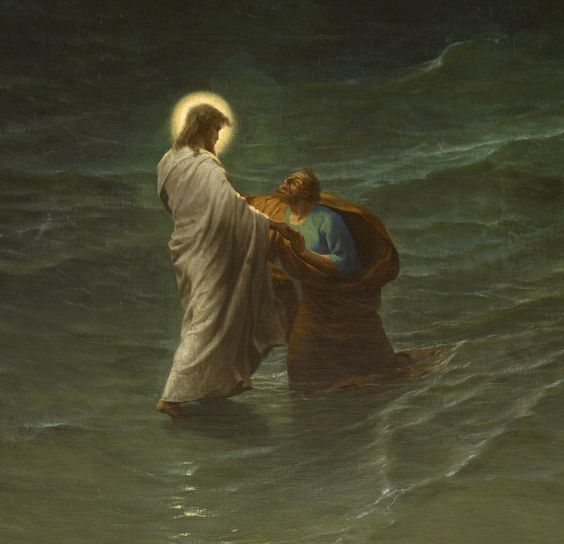
Temporal eternity
“Logismoi are much more than simple thoughts. They penetrate into the very depths of a human being. They have enormous power. Let us say that a simple thought is a weak logismos. We need to realize, however, that certain thoughts, or logismoi, once inside a human being, can undermine every trace of a spiritual life in its very foundation.
People who live in the world don’t know about the nature and power of logismoi. That is, they don’t have the experience of that reality. But as they proceed on their spiritual struggle, particularly through systematic prayer, then they are able to understand the true meaning and power of this reality” (Markides, The Mountain of Silence 118).
The Buddhists have a term for the reality we seek when endeavoring through the spiritual struggle to uncover Absolute Truth, which is Right View, to illustrate this concept in a different way than being described in a previous post, the Micchatta Sutta describes wrong view thusly:
“In a person of wrong view, wrong resolve comes into being. In a person of wrong resolve, wrong speech. In a person of wrong speech, wrong action. In a person of wrong action, wrong livelihood. In a person of wrong livelihood, wrong effort. In a person of wrong effort, wrong mindfulness. In a person of wrong mindfulness, wrong concentration. In a person of wrong concentration, wrong knowledge. In a person of wrong knowledge, wrong release… This is how from wrongness comes failure, not success” (AN 10.103).
Note the end, wrong release. The Eightfold Path of Buddhism is focused on cleansing the mental abstractions and spiritual ignorance of the self; purifying the way in which one interacts with the world through the unconscious influences and filters that have been grafted on through the experience of life. Christianity has a similar design, though we call this process cleansing the νοῦς, following the directions of Christ, “You blind [Pabst]! First clean the inside of the cup, so that the outside also may become clean” (Matthew 23:26).
In relation to the Eightfold Path, and the Buddhist Right View, Christ again speaks of the νοῦς, “But what comes out of the mouth proceeds from the heart, and this is what defiles. For out of the heart come evil intentions, murder, adultery, sexual immorality, theft, false witness, slander” (Matthew 15:18-19).
The νοῦς is the eye of the soul, some Church Fathers, call it the “heart,” and it is the seat of intelligence and the noetic faculties which are akin to the intuition or inner wisdom. Cleansing the noetic faculties purifies the intellectual faculties by extension, bringing the intellect into conformity with the Spirit, which is the energizing agent behind the purification of the soul.
This Spirit, the Holy Spirit, that which activates within us and cleanses the νοῦς is Divine Wisdom, or Hagia Sophia.
Sophia is the Wisdom of God, which is identified as God’s essence, God’s Uncreated Being that is transcendent which is actualized through our creaturely wisdom, which is God’s Essence is realized through us. Our humanity is Sophianic in that it has, being made in the Image of God, the capability to become deified by the energies of God.
The Sophianic impulse within us is to realize our humanity by the grace of God, which is a kenotic process, letting go of the images and representations that guide our minds back to worldly things, not only that but Divine Wisdom is what emerges through purifying the νοῦς, or the crucifixion of our mind to realize Christ within us.
Recovery has convinced me of the seriousness of spiritual realities and the consequences of neglecting our ontological task of everyone to realize their personhood by surrendering their subjective ‘I‘ and therefore their ‘truth‘ to God that Absolute Truth may be made manifest.
We are capable of knowing God via Sophia, capable of knowing Absolute Truth.
She is the Spirit that engenders the followers of the Way the power to activate their noetic faculties and purify their νοῦς. She is the Spirit that brings into existence Truth within our noetic faculties which cleanses the intellect. Sophia actualizes the potentiality of the eye of the soul, uniting the one to God.
This is Absolute Truth.
“Jesus answered, ‘You say that I am a king. For this I was born, and for this I came into the world, to testify to the truth. Everyone who belongs to the truth listens to my voice.’ Pilate asked him, ‘What is truth?’” (John 18:37-38).
Christians have a phrase; Truth is a person, and His Name is Christ.
Through recovery, which is essentially a journey of self-discovery, I have realized that without God I am nothing, because the concept of the individual Self is interdependent on the reality of God. I can only Be because of the Ground of All Being, which is the Father. Without the reality of God, the Sophianic impulse is rejected, where the individual does not submit their will to His and their intellect cannot be brought into conformity with the activated noetic faculties.
It is the unforgivable sin Christ speaks of, “Truly I tell you, people will be forgiven for their sins and whatever blasphemies they utter, but whoever blasphemes against the Holy Spirit can never have forgiveness but is guilty of an eternal sin” (Mark 3:28-29).
The sin is inherent in the act of rejecting God, it is effectively living without the reality of God and therefore our thoughts, emotions, and sensory perceptions will be constantly filtered through the same traumas, environmental factors, and unconscious influences.
Rejecting the Spirit is rejecting knowledge of self thereby rejecting knowledge of God.
Ultimately, it is a rejection of knowledge itself.
This what Fr. Maximos means when he talks about how the λογίσμοι becomes an entrenched reality within the νοῦς, which gives rise to obsession. In a neoplatonic sense (and Pauline), the material world is not evil, but when there is too much emphasis on the material world or when there is an assumption that the material world is all there is then there is a risk that one may end up worshiping the things of this world, or following the desires of the flesh,
“What we see here is a new type of natural or ‘physical’ condition that opposes spirituality: man considers himself to be merely a phenomenon of nature, one of the links of its chain… On the one hand, humanity becomes ‘flesh’ in the sense that nature gains dominion over the spirit in man. On the other hand, in practical atheism we see the development of the satanic ideology of opposition to God, even to the very idea of God. ‘Satanized’ man desires to destroy the image of God in himself, to abolish the very idea of God. The image of God in man is indestructible, but it has been obscured and distorted, and it must be restored and revealed” (Bulgakov, The Lamb of God 156/150-151).
This is the fallen state of Man, making us ideal hosts for the viral λογίσμοι to attach themselves to and propagate as opposed to the Holy Spirit doing the same. It is the tool of the enemy to make us forget our relation to God, to forget that we are made in His Image, to forget Him entirely. But it is an expression of this world’s desire to affirm its sinful behavior to abolish the idea of God. Additionally, it is the role that the dreaded λογίσμοι play in our lives to make us, when our passions become active to “behave like beasts” (St. Mark the Ascetic, Letter to Nicolas the Solitary, The Philokalia)
If there is no God then there is no objective reality, there is no objective morality, there is no objectivity. Period. When people try to destroy God in their lives, what they are implicitly doing is removing any objections to their behavior, so that they do not have to change.
So that they never heal.
This is a huge piece of the puzzle learned in recovery. People are actually opposed to internal transformation; people are afraid of change at a deep level and when they see other people doing what it is they are too afraid to do they go out of their way to either tear them down or talk about them behind their back, secretly hoping they fail. This is because when people see another become and realize their personhood it is an affront to their narrative that is built on habits of presupposed thought, emotion, and self-inflicted fear.
This is an obstacle one faces in their own spiritual journey, too, being an internal impulse not intuition, but instinct. Instinct is a mechanism of the ego, and the ego seeks safety and familiarity over the unknown, even a familiar hell.
It is better to recognize that then try and chase a comedian who wants to quit, so to speak. Your friends will leave your life in some way or another, if you do not change then you are not fulfilling your ontological task. It is a moral imperative to change, and Kant described this imperative as an imposition of pure reason, without getting deep into German idealism, but taking from transcendental idealism: Christ is above reason and is Reason.
Therefore, without Christ our reasoning, our creaturely wisdom, can only understand so much, “the temporal world, the world that exists in time, as well as time itself, can be understood only in connection with eternity, which is their foundation; conversely, eternity has its image or reflection in time” (Bulgakov, The Lamb of God 123). If we do not consider the world as a reflection of eternity then our creaturely wisdom can only interact with so much stimulus and in only so many ways that are already habituated to a certain number of charges, releasing as sinful manifestations, that are themselves predetermined via the same habituation.
The refusal to acknowledge the transcendent limits the self and its ability to perceive the world, which includes itself. The scope of reality becomes so narrow that suddenly the Solipsistic philosophy of Protagoras seems like the only rational model, but this is a demiurgic impulse whereby one forgets their own reality from spiritual blindness that accompanies the ignorance of God. Essentially, this model paves the way for self-deification whereby everyone is their own God, following their own subjective morality and whims.
Furthermore, the abolishment of God’s Image and setting oneself up as their own God is a deconstruction of our own humanity, “The humanization of God is the fundamental process of the inner consciousness of humanity… God without man, an ‘inhuman’ God, would be Satan, not God-in-Trinity” (Berdyaev, Freedom and the Spirit 189). It is not a coincidence that the culture that we live in, the way of the world, is so obsessed with deconstructing ideas, gender, art, even the superhero is deconstructed.
It is a current societal obsession which is directly linked to the degradation of our culture, deracination of religion, and man’s own severance from relationship with God. Our humanity is being destroyed through the nihilistic, hedonistic, and subjective truths that are permeating the landscape. It is unfortunate, too, because man is eager for God.
There is a God-sized hole in everyone who rejects the reality of a Transcendent Ground of All Being, and when we set up ourselves as our own God via everyone’s subjective truth then we are living in a state of spiritual isolation. If the world is incoherent due to the subjective nature of reality, then we are all set apart from each other. We become the perfect host for the λογίσμοι to take our mind’s captive. Everyone is removed from one another when truth is subjective; we are left bereft of a mutual coherence of objective reality.
“The human soul searches for a higher being, a return to the source of life and to the native land of the spirit. Human life becomes truly terrible when there ceases to be anything above man and when there is no place for the mystery of the divine and infinite. It is then that the tedium of non-being becomes apparent. The image of man is defaced when the image of God is obliterated from the human soul. Man in seeking for God seeks for himself and for his own humanity” (Berdyaev, Freedom and the Spirit 196-197).
Si comprehendis, non est Deus
 Witness, NM