Pabst learns the true meaning of Christmas
“In the beginning was the Dao, and the Dao was with God, and the Dao was God. He was in the beginning with God. All things came into being through him, and without him not one thing came into being. What has come into being in him was life, and the life was the light of all people. The light shines in the darkness, and the darkness did not overtake it.
There was a man sent from God whose name was John. He came as a witness to testify to the light, so that all might believe through him. He himself was not the light, but he came to testify to the light. The true light, which enlightens everyone, was coming into the world.
He was in the world, and the world came into being through him, yet the world did not know him. He came to what was his own, and his own people did not accept him. But to all who received him, who believed in his name, he gave power to become children of God, who were born, not of blood or of the will of the flesh or of the will of man, but of God.
And the Dao became flesh and lived among us, and we have seen his glory, the glory as of a father’s only son, full of grace and truth. (John testified to him and cried out, ‘This was he of whom I said, ‘He who comes after me ranks ahead of me because he was before me.’’) From his fullness we have all received, grace upon grace. The law indeed was given through Moses; grace and truth came through Jesus Christ. No one has ever seen God. It is the only Son, himself God, who is close to the Father’s heart, who has made him known” (John 1:1-18).
The rendering of the Word as the Dao in the Chinese translation of the Gospel According to St. John does not mean what we Westerners might conceptualize as the Dao of Daoism, instead it translates to reason, wisdom, and truth, making it closer in definition to the Greek Logos. However, the Logos, while meaning the above is also the underlying, ordering principle of the cosmos which could be argued makes it a akin to the Unchanging Dao, which itself is the underlying, guiding principle of existence. So, perhaps the first chapter of the Gospel According to St. John and the first chapter of the Dao De Jing are, indeed, referencing the same principle:
“The Dao that can be expressed is not the Unchanging Dao;
The name that can be named is not the Unchanging name.
The Unnameable is that from which Heaven and Earth derived, leaving itself unchanged.
Thinking of it as having a name, let it be called the Mother of all things.
He who is without earthly passions and without desire can perceive the profound mystery of that Unmanifested
Existence.
He who has not rid himself of desire can perceive only the Manifest, with its differentiations.
Nevertheless, the Manifest and the Unmanifest are in origin the same.
This sameness is the Mystery of Mysteries, the deep within the deep, the Doorway into all Mystery” (Dao De Jing 1).
By using the first chapter of the Dao De Jing and applying it to the Incarnate Word, we are offered a Way to the Father, the Unchanging Dao, through the Dao, Who is Christ: “And the Dao became flesh and lived among us, and we have seen his glory, the glory as of a father’s only son, full of grace and truth… No one has ever seen God. It is the only Son, himself God, who is close to the Father’s heart, who has made him known” (John 1:14/18), and to follow Him is to become one with the Dao,
“The Master keeps her mind
always at one with the Dao;
that is what gives her her radiance.
The Word is ungraspable.
How can her mind be at one with it?
Because she doesn’t cling to ideas.
The Word is dark and unfathomable.
How can it make her radiant?
Because she lets it.
Since before time and space were,
the Dao is.
It is beyond is and is not.
How do I know this is true?
I look inside myself and see” (Dao De Jing 21).
Christ is the Way to the unfathomable, Christ is the unfathomable made flesh. To be made radiant by the dark and unfathomable is the meaning of Advent, where we await the coming Incarnation via contemplation. The Nativity of our Lord occurred, physically, over two thousand years ago, but like the Mysteries of the rosary this is an event that is taking place eternally. Therefore Advent is a period of focused contemplation, carrying the Christ child to the scene of His Nativity, happening within us—this is to be made radiant.
Using the Dao, we see the Way in which we give birth to the eternal Logos:
“In the beginning was the Dao.
All things issue from it;
all things return to it.
To find the origin,
trace back to the manifestations.
When you recognize the children
and find the mother,
you will be free of sorrow.
If you close your mind in judgments
and traffic with desires,
your heart will be troubled.
If you keep your mind from judging
and aren’t led by the senses,
your heart will find peace.
Seeing into darkness is clarity.
Knowing how to yield is strength.
Use your own light
and return to the source of light.
This is called practicing eternity” (Dao De Jing 52).
The externalization of the Nativity; the visualizations conjured in praying the rosary; icons and images are one half of the generative properties planting the seeds within our souls that, if cultivated, will give birth to the Incarnation within us. This is known as kataphatic prayer, using thoughts, images, and words as a form of communion with the Divine.
In relation to being half of what gives rise to the Christ within us, this form of prayer is gendered masculine, as it is outward facing, projective, and using the conscious mind.
The Dao De Jing reminds us that if we lean too heavily on the yang principle, then we will fall out of alignment with ourselves and the Dao… The masculine, conscious mind practices prayer that cleanses the soul; it feeds the subconscious mind with Beauty, Scripture, and the externalized eternity to clean our internal dark glass. This form of prayer is energizing the noetic faculties that reside in the soul.
The soul—or the mirror within us—is easily defiled by sin due to external factors, trafficking with desires, judgements, and other manifold ways we cut ourselves off from God. The masculine principle, brave and courageous, cleanses the soul of this defilement by the grace of God, using this form of prayer.
But again, this is only one half of the process to make straight the way of the Lord.
We must balance this kataphatic, conscious, masculine prayer with the feminine principle:
Apophatic prayer.
This means, despite the images and visualizations that we have impregnated our souls with the next step is providing the fertile soil in which these seeds may grow by embodying the feminine in trust and surrender. We leave behind the world of images, words, and thoughts to step into the darkness. We let go of our expectations and assumptions; our wants and desires to stand face-to-unveiled-face with God.
Christ is born eternally and ex nihilo, arising from the silent land of darkness, far from images and sensual desires. It is the vocation of all Christians to give birth to the Christ from within, not simply allowing the event of His birth to ossify in the historical record. We give birth to the Incarnation by becoming meek like the Theotokos and practicing presence like the Unchanging Dao, flowing, not grasping but keeping our mind on the Dao, the Word, our Savior, like a mother contemplates her child growing within her womb.
Therefore, the advent season, appropriately positioned during the darkest season of the year, represents Christ arising from the proverbial darkness of Egypt: the land of hard hearts, ossified souls, and spiritual ignorance and Christ arising from the darkness that we embrace, acknowledging our own ignorance of God through trust and surrender; the strength in yielding to the darkness of the unknown.
We embrace this darkness by not clinging to the things of this world or our own understanding, because it is easy to miss the birth of Christ when we are busy grasping to the world of the senses and incorporeal things like projections, prejudices, and expectations.
Truth is born from emptiness.
The darkness of the land this season represents spiritual ignorance and is an invitation to empty the self of preconceptions and our human knowledge and rationality to be open to the Dao, the Logos—Who transcends reason, wisdom, and truth, because He is reason, wisdom, and truth.
Advent is a time to listen to the voice of the one crying in the wilderness and prepare the way of the Lord, for the Kingdom of God, the source of light, is within you.
In these final days of Advent, while we await the coming of the Incarnate Word let the darkness of the land be an invitation to let go of the images, thoughts, and words—bringing balance to the masculine, yang, projective force by embodying the feminine, yin, passive principle. This principle of yin is dark and in the dark the source of light is revealed. Advent and Christmas means stepping into a present state of being, opening to God through self-emptying, allowing the flow of the Unchanging Dao to be everywhere present and filling all things.
This is called practicing eternity.
Turning inward; Metanoia.
Letting go of the image; forgetting the senses.
Not clinging; becoming the mother.
Recognize the Child; the same yesterday and today and forever.
All things issue from it; all things return to it.
The image of the Unchanging Dao; the firstborn of all creation.
In him all things in heaven and on earth were created; things changing and unchanging.
He himself is before all things, and in him all things hold together.
The Dao is dark and unfathomable.
Seeing into darkness is clarity.
Knowing how to yield is strength.
And the Dao became flesh and lived among us.
And we have seen His glory, the glory as of a father’s only son.
How can it make her radiant?
Full of grace and truth.
Because she lets it.
Since before time and space were no one has ever seen God.
It is beyond is and is not.
It is the only Son, Himself God, who is close to the Father’s heart.
Who has made Him known.
How do I know this is true?
I look inside myself and see.
An epiphany.
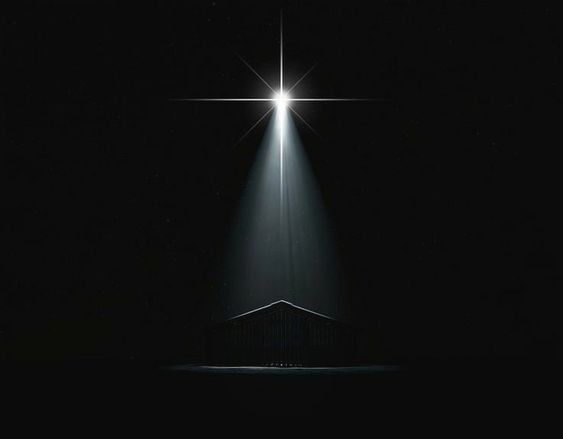
The light shines in the darkness, and the darkness did not overtake it. Selah.
Si comprehendis, non est Deus
 Witness, NM