Pabst’s pathworks the rosary
“O thou that settest out upon the Path, false is the Phantom that thou seekest. When thou hast it thou shalt know all bitterness, thy teeth fixed in the Sodom-Apple.
Thus hast thou been lured along that Path, whose terror else had driven thee far away.
O thou that stridest upon the middle of the Path, no phantoms mock thee. For the stride’s sake thou stridest.
Thus art thou lured along that Path, whose fascination else had driven thee far away.
O thou that drawest toward the End of The Path, effort is no more. Faster and faster dost thou fall; thy weariness is changed into Ineffable Rest.
For there is no Thou upon that Path: thou hast become The Way”
(Crowley, Pilgrim-Talk).
Different cultures and traditions have what can be understood as maps of consciousness.
These models are found in the chakra system, Chinese meridians, and the Kabalistic Tree of Life, with each Sephira corresponding to a different aspect of consciousness. Magicians, shamans, and yogis have been spent their lives mapping these levels of consciousness that our cultures have inherited and even modernized, seen with Timothy Leary’s eight circuit model and even Maslow’s hierarchy of needs to a lesser extent. As the founder of General Semantics, Alfred Korzybski, says, “The map is not the territory,” so while these maps are helpful guideposts, they cannot convey the reality of mapping the territory ourselves.
Additionally, the map of consciousness angle is a bottom-up point of view and to invert this perspective it is seen, at least with the Tree of Life (I do not have experience with chakras or meridians), that this is how God… Gods…
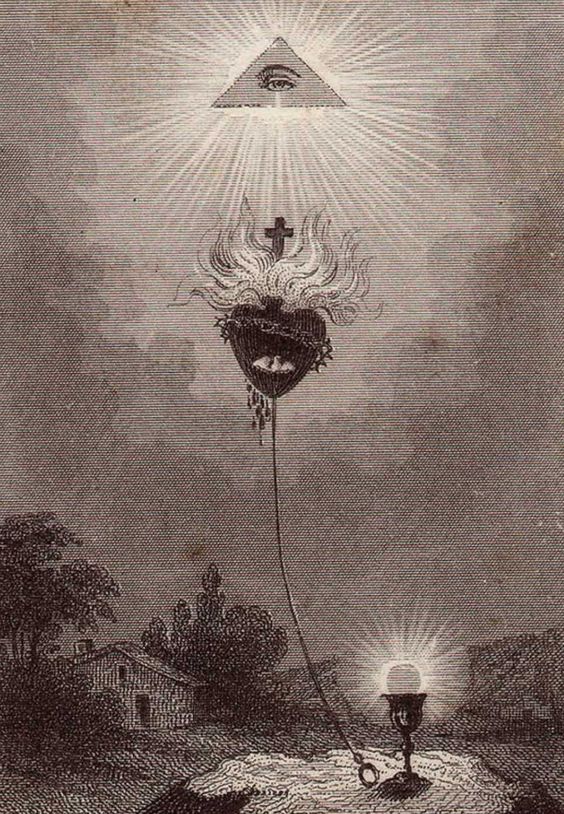
The cosmological view of the Tree of Life shows a Deity that pours Himself out, emanating as various aspects of the Divine Self in the Sephira, descending from the subtle to the gross, which is this plane of reality: Malkuth. This is the world of action, Olam Asiyah and by pathworking through the worlds, Yetzirah, Briah, and Atziluth the practitioner moves through the Sephira corresponding to the emanations of God and one’s own consciousness.
As mentioned in a previous post, within the world of ceremonial magic, the LBRP is meant to both facilitate our pathworking along these channels of consciousness and to keep us safe from what we might encounter along the way. There are entities on the path that do not want us to be on the path; these energetic intelligences can psychically damage us which can lead to all sorts of psychological and physical issues. I also discussed what other internal struggles may arise from spiritual practices. It is important to stay safe, regardless of what map one might be using.
Pathworking is an ancient technique where an experienced guide leads a student through a series of imaginal realities where the student comes face-to-face with obstacles within themselves and are led to archetypal lands, events, and persons that connects the conscious mind with the subconscious, facilitating the emergence of self, building on one’s character, and initiatory thresholds.
It is the Jungian Active Imagination. Pathworking is where the self meets the self, and is also one of the ways in which the self approaches God.
“All true alchemists know that the alchemical symbol is a mirage as the theater is a mirage. And this perpetual allusion to the materials. and the principle of the theater found in almost all alchemical books should be understood as the expression of an identity (of which alchemists are extremely aware) existing between the world in which the characters, objects, images, and in a general way all that constitutes the virtual reality of the theater develops, and the purely fictitious and illusory world in which the symbols of alchemy are evolved.
These symbols, which indicate what might be called philosophical states of matter, already start the mind on its way toward that fiery purification, that unification and that emaciation (in a horribly simplified and pure sense) of the natural molecules; on its way toward that operation which permits, by sheer force of destructive analysis, the reconception [sic] and reconstitution of solids according that equilibrium of spiritual descent by which they ultimately become gold again. It is not sufficiently understood how much the material symbolism used to designate this mysterious operation corresponds to a parallel symbolism in the mind, a deployment of ideas and appearances by which all that is theatrical in the theater is designated and can be distinguished philosophically…
If in fact we raise the question of the origins and raison d’etre (or primordial necessity) of the theater, we find, metaphysically, the materialization or rather the exteriorization of a kind of essential drama which would contain, in a manner at once manifold and unique, the essential principles of all drama, already disposed and divided, not so much as to lose their character as principles, but enough to comprise, in a substantial and active fashion (i.e., resonantly), an infinite perspective of conflicts.
To analyze such a drama philosophically is impossible; only poetically and by seizing upon what is communicative and magnetic in the principles of all the arts can we, by shapes, sounds, music, and volumes, evoke, passing by way of all natural resemblances of images and affinities to each other not the primordial directions of the mind, which our excessive logical intellectualism would reduce to merely useless schemata, but states of an acuteness so intense and so absolute that we sense, beyond the tremors of all music and form, the underlying menace of a chaos as decisive as it is dangerous.
And this essential drama, we come to realize, exists, and in the image of something subtler than Creation itself, something which must be represented as the result of one Will alone-and without conflict” (Antonin Artaud, The Theater and its Double).
The alchemical symbols Artaud writes about, as far as magical pathworking goes, are seen archetypically on the maps of consciousness that we have available to us. These symbols can represent “an infinite perspective of conflicts” and as the magus, it is their spiritual responsibility to confront the multiplicity within them that in some way is disorganizing their interior world, keeping them in cycles of unwanted states of consciousness and perpetuating actions and behavior they seek to change. One of the ways in which the mystic pursues transformation is through this form of ritual drama, which we call pathworking.
This is what brings me to today’s post. The rosary benefits the practitioner in a litany of ways, ways that I would argue exceeds the LBRP’s usefulness on the spiritual journey. It is an effective tool for manifestation, exorcism, and cultivating the virtues like humility and meekness. It is also an extremely powerful set of devotional prayers that centers the practitioner on their course toward God. While I was writing about the differences between the LBRP and the rosary, a question did come to mind: How does one pathwork with the rosary? Does the rosary facilitate mapping out levels of consciousness? If so, what is that map?
Hinduism has a map. Judaism has a map (and by extension hermeticism has a map). Daoism has a map.
Does Christianity have a map?
In the 15th century, in the dawn of Enlightenment, Catholic priests were beginning to experiment with the Kabalistic system, which was reinterpreted with Christian theology, much like what we did with the Hebrew Bible. The use of Kabballah by the Church was finished by the 18th century with the rise of Renaissance occultism utilizing the Hermetic Qabalah and the Roman Catholic Church distancing itself, aggressively, from any association with elements of “magic.”
This was a large part due to the negative connotation magic took on during the Middle Ages, in the centuries after the expulsion of the divine feminine from the Church and the demonization of formerly baptized pagan spirits the antithetical “witchcraft” emerged in the wake of the Church’s redefinition. Of which Ivan Illich writes,
“The dragons and kobolds, the basilisks and wild men, were squeezed out of the interior as architecture changed from Romanesque to Gothic. There was no room for them on the tightly bundled, narrow and pointed pillars. Like bats, for a century or more they continued to cling to the outside of the church. As gargoyles, they stuck out into the air as if they were about to take flight, meanwhile disgorging water from their mouths or groins. The theologians, wrapped up in conscience, could no longer bless them.
As the Renaissance approached, learned men interpreted the memory of this harlequin rabble as emblems, symbols, and cabalistic types. And, as a matter of fact, the gargoyles did take off, roaming around the countryside for the next three centuries as creatures never before seen: defrocked saints, martyrs with club feet, dragons with clipped wings. They behaved like packs of domesticated animals gone wild again, like alley cats in a war-ravaged town. These strange spirits called forth a new kind of priest, generally called a ‘witch.’”
So, during the Middle Ages magic was used as a sort of catch-all term meaning suspicious, with the accusation being thrown at Muslims and Jews alike. Ironically, the same charge would be made against the Catholic Church by burgeoning Protestant movement declaring the Mass, magical and nonreligious. To their credit, they were only half wrong. But I digress.
So, what is our map?
What are our symbols? What is our sacred drama that will cultivate our emergence of self?
It might help us to begin drawing one up by letting go of the expectations of the territory.
If there is one thing Christianity is good at, it is subverting expectations.
To be concluded…
Si comprehendis, non est Deus
 Witness, NM