Discerning the Way
“I am a rose of Sharon,
A lily of the valleys.
As a lily among the brambles,
So is my love among the maidens” (Song of Songs 2:1-2).
Discrimination is what keeps us walking the royal road, keeping us free of delusion; this is the Buddhist right view on the eightfold path. Discrimination is not only the ability to separate virtue from vice, but the ability to remain under the guidance of God. Discrimination is the sun shining the way forward giving light to all things that we might see all as it is and from there choose what will keep us on course.
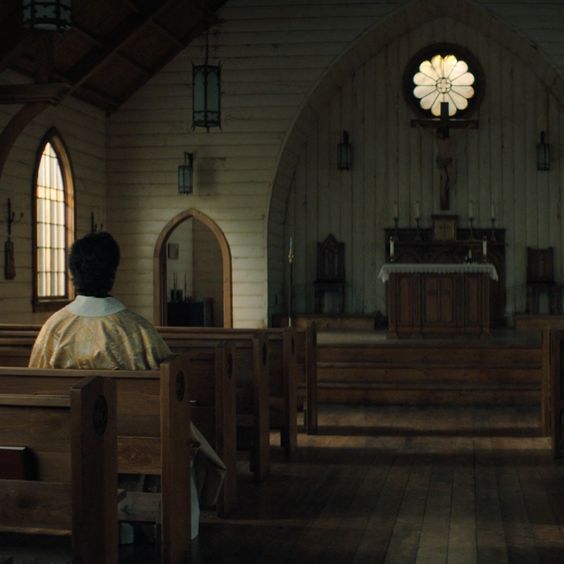
This is what is the most important thing regarding discernment and the other virtues it purifies: we must have a goal; we must have a destination lest our discrimination becomes arbitrary. Therein lies the danger of having no direction and why it may be best not to interact with those of us without direction; those of us who hold no orientation toward a goal, because without direction it is too easy to begin collecting dust, or attachments to this world, which builds up anxieties from which plagues of the mind emerge and our discernment is poisoned by the things of this world.
I’ll give you an example and stop me if I said this before, but one time when I was seventeen I was out with a buddy of mine, we were out walking around, stealing stuff from Rite Aids and the local farmer’s market. We were approached by a guy who was selling “H,” and he wanted to see if we were interested. My friend immediately said, “yes.” Now, I do not remember the end of this story, because stories like this have no ending, it’s just strung-out turtles all the way down, but the point is that we were two kids without any direction (or supervision) and because of this lack of orientation toward anything at all, really, the opportunity to do heroin was simply another thing to do on a Saturday at noon.
There’s not much more to that story other than to say that you can be friends with someone for a long time, but never really know them until they accept the offer of heroin when it is presented. It’s kind of like Sun Tzu said about taking the man up to the volcano, except this lava is called tar and the eruption comes from a spoon.
I digress.
The royal road is bringing us to God, the Middle Way takes one to nirvana (both destinations require a lot of self-effort and grace). The kingdom of heaven and nirvana are both attained through the one rooting out their attachments and cultivating a discerning eye that will help them act in a way which moves them closer to their goal.
So, we must have a goal, it is a prerequisite of climbing any mountain that one has the summit in mind before leaving basecamp and if there are those at camp who cannot make up their mind as to how far this journey will be the one must leave them behind or we will run the risk of becoming angry with people who do not know what they want which is no one’s responsibility but their own.
When one becomes angry about these types of things they will, ironically, remain at basecamp themselves so sure that they can help push others to do what they want to achieve. This is a form of control, attachment, that is a backdoor covenant with yourself to stay passive and not try to make the hike.
This is why to walk the royal road is to be like the ‘lily among the thorns’ which illustrates our taking on a simplistic nature among the worldly things that lead to anxiety and attachment, the wicked writhe in pain all their days, through all the years that are laid up for the ruthless” (Job 15:20). It may be a loaded word, but wicked in this way is like being caught in the bramble of the forest, the thorns suffocating the cultivation of the lily and therefore shaping our path where we no longer are walking the royal road, but rather the worldly path:
“They wander abroad for bread, saying, ‘Where is it?’
They know that a day of darkness is ready at hand;
Distress and anguish terrify them” (Job 15:23-24).
The path of the world is anxious, but as Christ says, “Come to me, all you who are weary and are carrying heavy burdens, and I will give you rest. Take my yoke upon you, and learn from me, for I am gentle and humble in heart, and you will find rest for your souls. For my yoke is easy, and my burden is light” (Matthew 11:28-30).
To be a Christian is to cultivate our beauty among the thorns, among the dust of this world—attachments. Taking Christ’s yoke upon ourselves is being of the same mind—φρόνημα—of Christ…
Si comprehendis, non est Deus
 Witness, NM