The Chaotic Magical Record
“The Quest of the Holy Grail, the Search for the Stone of the Philosophers—by whatever name we choose to call the Great Work—is therefore endless. Success only opens up new avenues of brilliant possibility. Yea, verily and Amen! the task is tireless and its joys without bounds; for the whole Universe, and all that in it is, what is it but the infinite playground of the Crowned and Conquering Child, of the insatiable, the innocent, the ever-rejoicing Heir of Space and Eternity, whose name is MAN?”
– Crowley, Little Essays Toward Truth
A few years ago I started doing magic, not stage magic, but the transformative process involving meditation, qabalah, tarot, and ceremonial magic that are the skeletal structure of the Western metaphysical tradition that is called “Magick.”
Magic (I am removing the archaic “K”) is defined by Aleister Crowley as “the Science and Art of causing Change to occur in conformity with Will” (Crowley, Magick without Tears).
Crowley continues, adding, “II) POSTULATE. ANY required change may be effected by the application of the proper kind and degree of Force in the proper manner, through the proper medium to the proper object […]
III) THEOREMS.
1) Every intentional act is a Magickal act” (Crowley, Magick in Theory and Practice).
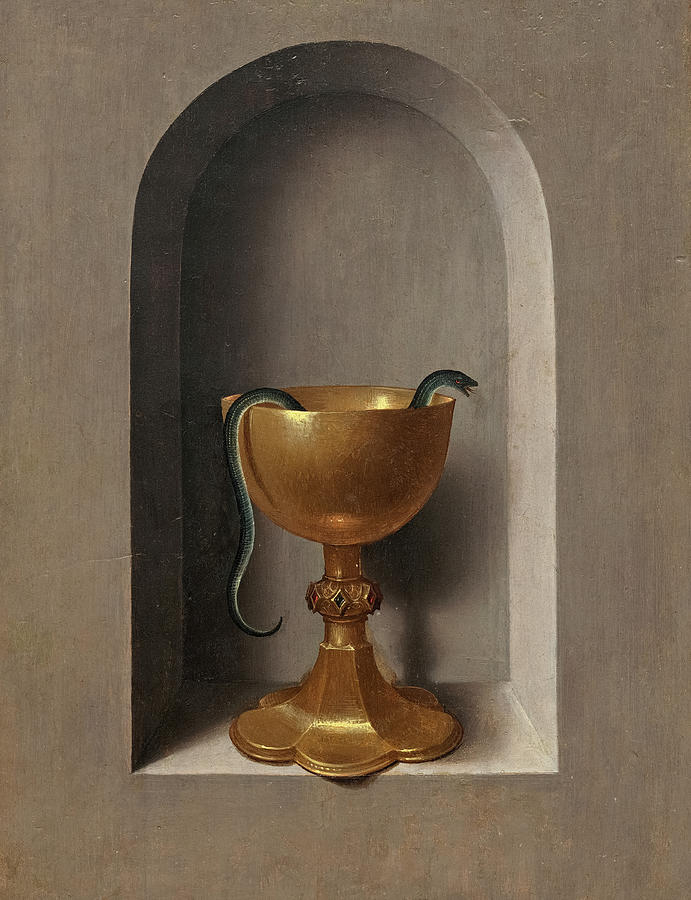
The rest of the theorems should be required reading, however there needs to be some sort of defined consensus before we discuss magic. The quest for the Holy Grail is the inner journey of becoming fully realized and attaining union with God.
“23) Magick is the Science of understanding oneself and one’s conditions. It is the Art of applying that understanding in action” (Ibid.)
This understanding in action is Will and by understanding one’s conditions one becomes aware of their True Will.
These are a lot of terms to throw out, so let’s start at the beginning.
From a very early age I have been fascinated with piety and spiritual expression, being raised Christian I was enamored with priests and monks even though I was brought up among one of the Christianities that decries Catholicism as akin to Satanism, or at best–polytheistic. This is no doubt why I rejected this form of religion in favor of Eastern philosophy. In high school I was obsessed with deconstructing religion through an existentialist lens, considered the Daodejing the crowning achievement of sacred literature, and finally grew increasingly infatuated with the Western magical tradition otherwise known as Ceremonial Magic.
It was during this time of my mid to late teens that I became insatiably enamored with the quest for God, even going so far as to tell my mother that I would do whatever possible to go to seminary.
This is, of course, when the drinking and drugs began. Go figure.
Nine years later I washed up on the shores of addiction, battered and mangled, finding myself wanting to scratch the itch I had in high school, but not sure where to start–the only thing I remembered after the near-decade long bender was how much I enjoyed the Daodejing, so I got a copy and suddenly I was emboldened with the same fervor for God as I had when I was a teenager, almost like alcohol impedes brain development or something.
Daoism was an effective primer for what would become my first fascination with, and eventual practice of, magic: Chaos magic. Chaos magic is a 20th century system of magic, realizing itself in England during the 1970’s and 1980’s finding its way overseas to the US via the Brits in the ‘90’s. The US counterculture scene of the 1960’s and 1970’s was fertile ground to find a counterpart and supplement to this magical system. Writers like William S. Burroughs, Robert Anton Wilson, Timothy Leary, and the newly formed religion, Discordianism, gave chaos magic a foundation to its practice in the states.
It also gave chaos magic an identity merging human psychology and quantum uncertainty principles into a magical system, defined by Peter Carroll’s seminal work, “Liber Null & Psychonaut.”
The synthesis of British punk and US counterculture ensured chaos magic would have a grounded, DIY approach where the aphorism “Nothing is true, everything is permitted” was the driving concept for practitioners. The practices of chaos magic are aimed at experimenting with the plasticity of reality, showing how it is not a constant, nor a given, and how it changes from person to person (see: linguistic relativity theory for example).
The aphorism has as its mythological origin as being the dying words of Hasan-i Sabbah, the founder of the hashshashin, and regardless of its inception the axiom would inspire and influence chaos magic through the works of Peter Carroll, Robert Anton Wilson, and Friedrich Nietzsche. This principle affirmed chaos magic’s autonomous path, suggesting that there is no right or wrong way up the mountain.
The issue with chaos magic, because of its DIY and experimental approach, is that the mountain means different things to different practitioners. The chaos formula treats the different magical, spiritual, and religious paradigms as relativistic constructs that can be used to manipulate reality to an end result emphasizing the magical system’s subjectivity regarding reality.
Chaos magic’s practical elements tend to look similar to shamanism, using apotropaic, sympathetic, and other primitive (primitive meaning ancient) forms of magic efficiently to manipulate the material and immaterial worlds.
One way this is done is by attaining the state called gnosis, derived from the Greek, γνῶσις (knowledge), an altered state of consciousness where the conscious mind is bypassed allowing a thought, visualization, or idea to enter the subconscious mind facilitating a successful magical operation.
The conscious mind, in the world of chaos magic, is an impediment to magic working because of the conscious mind’s skepticism and its inability to let go of certain thoughts or ideas. ‘Set and forget’ is an important component of magical workings wherein the practitioner performs an operation and lets go of the need for the ‘spell’ to work.
“For pure will, unassuaged of purpose, delivered from the lust of result, is every way perfect” (Liber AL I:44).
The lust of result is another term for attachment to an outcome of our various works. This extends to all things in life where we, regardless of spiritual or religious tradition, must act in a way that is unconcerned with the result, but is enamored with the process.
Gnosis is incredibly difficult to attain, because it is not unlike a Zen meditative mind, in fact it is like the Hindu and Buddhist concept of Samadhi, where the meditative mind is focused on a single point. This is the eight limb of yoga and the last step of the eightfold path in Buddhism. It is extremely difficult to attain this level of meditative focus, taking years to achieve. It is not simply being undistracted in meditation, though it is this, too; Samadhi is the step in yoga where the consciousness of the observer is absorbed by the observed, such as being infused into the Absolute.
Samadhi is the neo-Platonic Henosis in which the practitioner unites with the Monad, the union of the microcosm with the macrocosm.
Casually achieving Samadhi is what chaos magic professes to do in practice in order to impregnate the subconscious mind with transformative self-concepts and material, worldly change. The magician practices an either inhibitory or ecstatic form of gnosis: fasting, drumming, dancing, self-hypnosis, and (the most popular) sexual excitation with the goal to lose oneself, if just for a nanosecond, while focusing on their desired change–where the single point state of meditative consciousness is achieved so has the magical operation been successful. All there is to do is to forget which is easier said than done.
Ultimately, chaos magic did not lead me to a categorical understanding of reality or myself, because at the end of the day chaos magic is a dead-end spiritual paradigm that rejects cosmological models of other traditions as a feature, not a bug, and Peter Carroll’s own suggested spiritual paradigm shifting does nothing more than to reveal the malleability of one’s own mind, but never fixes one on a course toward the summum bonum.
This paradigm has—by design—no absolute truth, no ultimate reality, and certainly no Truth.
The experience with chaos magic, however, opened me up to what I was exploring all those years ago in high school: the world of ceremonial magic. A world that involves robes and pageantry and for that reason I decided not to pursue it during my high school days because I was very interested in having sex ever in my life. That being said, ceremonial magic, which I will refer to as ‘high magic’ going forward (I’ll explain why in the following piece), is exactly the type of spiritual form that my brain resonates with: ritual, memorization, intonation. Piety.
Plus, it has what chaos magic could never have, which is a lore: volumes of texts dedicated to the theory and practice of high magic, evolving over hundreds of years.
When you’re drying out and piecing your life back together after so many years of throwing time and energy into vodka you need lore, something to lose yourself in to avoid thinking about… anything. While I would suggest against this particular approach to any spiritual system because of its risk of spiritual bypassing (sometimes that’s the point), but mostly because by doing spiritual practices these do happen, and magic is no exception.
Running away from your problems is not the best strategy to find the Grail, but you do find it, one way or another, because the grail seeks you, too.
“It is the glory of God to conceal things,
but the glory of kings is to search things out.
Like the heavens for height, like the earth for depth,
so the mind of kings is unsearchable.
Take away the dross from the silver,
and the smith has material for a vessel” (Proverbs 25:2-4).
Si comprehendis, non est Deus
 Witness, NM