Thy Will Be Done
“God, direct my thinking today so that it be empty of self pity, dishonesty, self-will, self-seeking and fear. God, inspire my thinking, decisions and intuitions. Help me to relax and take it easy. Free me from doubt and indecision. Guide me through this day and show me my next step. God, show me what I need to do to take care of any problems. I ask all these things that I may be of maximum service to you and my fellow man. In the spirit of the Steps I pray. AMEN” (Eleventh Step Morning Prayer).
Right intention, or samma sankappa, is the practice of νῆψις in that the practitioner guards themselves against harmful thinking while cultivating non-harmful thoughts, “Watchfulness (νῆψις) is a continual fixing and halting of thought at the entrance of the heart. In this way the predatory and murderous thoughts are marked down as they approach and what they say and do is noted; and we can see in what specious and delusive form the demons are trying to deceive the intellect” (The Philokalia 163).
The practice of right intention is another lotus growing from the second step on the Path: intention of renunciation, the intention of good will, and the intention of harmlessness.
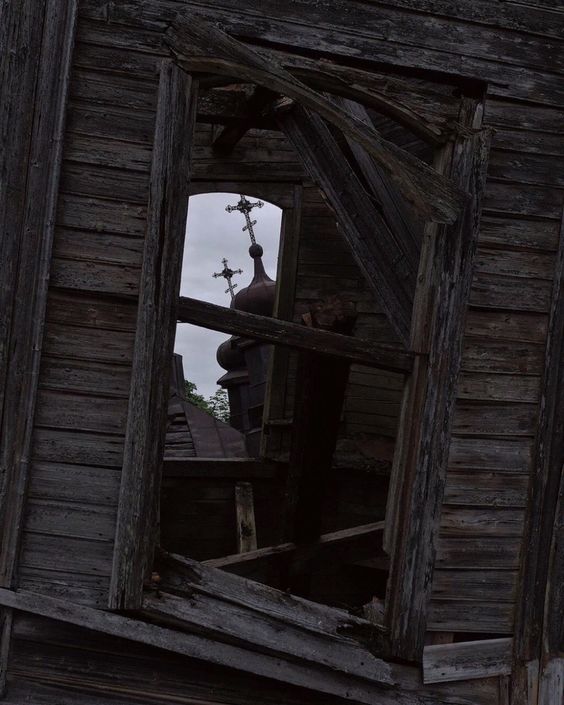
The way of the world is the way of desire and with this practice we are learning how to resist the way of desire, resist the temptations of the passions. This means approaching an attitude of how our thoughts and actions affect the world and ourselves. We are not simply agreeing that acting in a way that produces good fruits is a good way to live, we are intending to live this way by developing a mind that is not pulled by our cravings. In Christian terms we are practicing a continued μετάνοια (metanoia), turning away from samudaya toward God, and this is accomplished by heeding the words of St. Paul,
“Take care that no one repays evil for evil; rather, always strive to do good to one another, both within your own circle and towards all other people. Have joy within yourselves always. Do not neglect your practice of prayer. In all things, cultivate the sacramental mood of thanksgiving” (1 Thessalonians 5:15-18).
Right intention begins with generosity which “teaches us how to let go of our self-centeredness, to let go of clinging to ideas of ‘mine’ and ‘me.’ Selfishness, or self-centeredness, is one of the ways we justify and cling to our addictive behaviors. Generosity comes from the awareness that we’re holding on too tightly to our selfishness in a given moment. The karmic result of looking at the world only through the lens of ‘me’ and ‘mine’ and ‘what I want’ leads to loneliness, separation, and dissatisfaction” (Dharma Recovery 25).
The intention of renunciation teaches to detach ourselves from the things we cherish by understanding ourselves in relation to the desire to hold onto life and its temporal things, because clinging leads to suffering.
This does not mean to detach so much that life becomes meaningless, only to assume a different position in relation to life. If we see desire or our passions as something to be satisfied in order to attain happiness we have lost, falling back into the way of the world–chasing desire.
The intention of good will is cultivating an appreciative joy for others; this practice opposes ill will which is a way of thinking that comes from anger and aversion. Yielding to ill will produces resentment and poisons our relationships. The Buddha teaches a heart practice, metta, as a remedy for this way of thinking, helping us be free of our attachments—and addiction to unwelcome states of consciousness such as anger—moving us toward an agape love for our fellow man.
The love the Father has for His children; this is the brotherly love of Christianity.
This love, the essence of our Father in heaven is spoken about in the second epistle of Peter,
“Thereby we have been granted the most precious and significant promises; through them you will win an even greater share in the nature of the divine Being; you are meant to escape from the declining, craving-filled life of the world of the senses. Now use all your enthusiasm and devotion so that true morality may grow out of the power of your faith; and with morality spiritual insight, and with spiritual insight purity of soul, and with purity of soul the strength to bear your destiny, and with the strength to bear your destiny piety, and with piety brotherliness, and with brotherliness love” (2 Peter 1:4-8).
Herein we can understand the practice of intentionality being a responsible engagement of spiritual matters and the way in which we conduct ourselves in the world. It’s an approach that requires a soft heart that comes from compunction where we are wounded by the realities of our thoughts and actions that produced rotten fruit, but instead of falling into despair upon this illumination we take responsibility.
“We try not to confuse intention with impact. Our intention may be to not harm, but sometimes the impact is that we hurt someone. Many of us have experienced this in our addictions. Without intending to, and often without even being aware of it, we’ve created wreckage in other people’s lives. The way we choose to practice compassion in recovery is by being accountable when our actions hurt someone, and by acknowledging this hurt without blame or shame, defensiveness or justification” (Dharma Recovery 26).
This extends in reverse, too, because if you’re a petty alcoholic like I am then you might read this and think, “What about them… Why do I have to do this? When will they take accountability for their actions?!”
I’m afraid that’s not the point and still imparts a sense of attachment to the world and the people in it. It’s a desire, a craving that might never be satisfied (which are the best ones, obviously). So, I’m going out on a limb to assume this is another response from the addict in me. I’m still seeking ways in which I can resent others and play up my own martyr-complex. If anything, this is a cultivation of anger. It’s also a bitter way of controlling others where everyone needs to fit into my narrative, everyone needs to do what I want them to do… perhaps my mother was right all those years ago, maybe there really is something obstructing the light from my eyes,
“The eye is the lamp of the body. So if your eye is healthy, your whole body will be full of light, but if your eye is unhealthy, your whole body will be full of darkness. If, then, the light in you is darkness, how great is the darkness” (Mathew 6:22-23).
The conviction we embody in endeavoring down the Eightfold Path is the same faith we have in God when we take steps toward θέωσις: hoping, praying, that by not giving up and continuing to walk the Way that we might one day be full of light.
That light comes from an open heart, an honest way of living where we take responsibility for ourselves and our relation with the world. No matter how much we don’t really want to… Even when we really don’t want to take responsibility and would rather everyone else do it. Nevertheless, it is written,
“God is love and he who remains in love remains in God, and God remains in him […] Whoever says that he loves God, and yet hates his brother, he is a liar. For if someone does not love the brother whom he can see, he will be unable to love God whom he cannot see” (1 John 4:16/20).
I guess… I guess in wanting to be stuck in suffering, attached to things of this world, and chasing desire we are—by embodying this way of being—blocking others from recovering who they are…
So, metta or: loving-kindness. The thinking and actions arising from wishing well for all people. Oof, I almost chipped a tooth writing that sentence. Yes, everyone. God, does that fucking suck or what? I mean, don’t get me wrong, all this mystical talk gets me fired up, but the mundane stuff is just too freaking hard. I suppose I’ve had it wrong for almost a decade, the difficult stuff is not attaining visions or having mystical experiences–they aren’t exactly flying off the shelves, but from my own various practices over the years I’d say practicing compassion and generosity are miracles compared to the “rare” direct interactions with the divine.
I could regale you with a tale or two about how I had this mind-blowing experience or this mystical encounter that changed how I saw life, but did those points of contact help me forgive others? Did they help me reconsider my relationship with sobriety? Did they make me feel holy?
Kind of… for like half a day.
Less if I’m going to be honest.
Then I was right back to being petty, being hurt by this and that, being resentful and cultivating anger.
What is the point of contemplative practice if it’s not changing us?
I’m sorry to say, but then it becomes another attachment, another addiction–it’s called process addictions that do not register as addictions at first, but then they slowly become another form of samudaya in our lives. It’s just another escape or worse–they become a way for us to feel superior to others. If our contemplative practices aren’t humbling us, then I’d suggest we’re doing them wrong.
So it is with loving-kindness, extending that to everyone on this earth, praying that mercy be shown to all souls who, by the nature of this world, are conditioned to follow the way of desire. We are not wishing well for them nor praying for mercy to be shown to them for their benefit, though. Selfishly, I need to say this part and it may not sound good, but it’s true. Praying for others and forgiving them (at least trying to) is our way out of suffering.
We’re praying for the liberation of everyone.
When St. John the Forerunner was killed and went to Hades, he did not preach the coming of the Light to those among the dead that he felt were worthy of hearing his message of repentance and the Kingdom drawing near. He did not seek out those who, had the Way been opened, would have surely gone to Paradise upon their repose. No, he sought everyone in the land of the dead and continued his ministry pointing to the coming of Christ.
When we allow the way of desire to shape our interpretation of the phenomenal world, we are conditioned to react in certain ways that steer us toward suffering. When we pray that all beings are well and that they are free from suffering then we are offering ourselves in that prayer, too. But if we exclude anyone then we exclude ourselves with them, such is the nature of attachments. Besides, if I judge anyone else for their actions then how much more will I be judged by God? Not only that, but if I retain the sins of others then my own are retained. Neither can be forgiven.
In this sense forgiveness is liberation. By loosening our clinging to the things of this world and the people who have slighted us in some way or done what we feel they ought not have done then we are stepping closer to them. And to God by emulating His loving-kindness, and by moving closer to God we move closer to ourselves in an understanding, wiser, and undefiled way.
Just as God understands Himself through the loving connection of Sophia and the Persons of the Trinity we also, made in His image, seek to be known by reconciliation with God. Not only that, but we seek to be known by becoming like God through the process of θέωσις: “God’s becoming God not for Himself but for the world together with the becoming of the world” (Bulgakov 134), this is the pouring of Himself out in an eternal kenotic relationship for the becoming of the world. It points to a God Who is inside, outside, and is time. We cannot, of course, become God like this, however we do want to become known for the world: this is love.
This love wants action; it seeks movement which is essential in understanding itself in relation to the world through order.
“Forgiveness allows us to let go of the guilt and shame of our own harmful actions. We remember that compassion is an action, so when we forgive ourselves we also set an intention not to re-create or continue the harm we have caused to others and to ourselves. Making amends is an important part of forgiveness. As we begin to gain clarity about the harm we caused in our addiction, we commit to make amends for that harmful behavior. We don’t make amends for the sake of satisfying some external standard of morality, to be forgiven, or to get something in return. Instead, we use the process as a way to let go of our expectations and disappointments in others and ourselves—in other words, to let go of our attachment to a different past” (Dharma Recovery 29-30).
This is a movement toward order, instead of stagnating living in this cycle of death and rebirth we are propelled forward. We are propelled out of that past, our many, many mistakes and the judgment of others.
This is love in action.
I have been asking myself why I am like this for so long assuming I had some sort of defect. Why do I have to do this while everyone else gets to… But then I have to guard my thoughts when I get like this because this is an incorrect view, it’s an energetic interpretation of the world, conditioning the shape of my thoughts and actions toward suffering. This is the wide gate to perdition that I cling to through this way of thinking. And so, it is with faith, conviction, and hope that I take the next step. This next step is through prayer and meditation to improve our conscious contact with God as we understood Him, praying only for knowledge of His will for us and the power to carry that out.
It’s all or nothing at this point. I’ve made it past three years and it’s time to get serious about my recovery, because as much as I do there can always be more done to facilitate walking the Path: the Way that leads to life. If you disagree then I don’t know if you can relate to my problems or my dreams, but if you do then you are seen and understood by me.
This type of work requires everything you have and a whole lifetime (sometimes more) to do it. The addict mind typically shares the all or nothing mentality which may be a cognitive distortion, I know it is with me, however sometimes it’s useful when it’s redirected toward a goal, or a contemplative practice. The practice itself helps to smoothen the edges of black-and-white thinking while still helping guard against outright harmful thinking. It’s a really good supplement to recovery as recovery has many obstacles and they generally begin in the mind.
So, why are we like this?
It’s so we might boast in our afflictions because our afflictions produce endurance which begets character–that we might strengthen ourselves for this battle we fight. They don’t just send you home when you wave the white flag of victory, there’s work to be done. I feel addicts become the chaplains of the war effort, because they understand the holistic nature of this battle. Illustrated by my family member’s own work in recovery programs as a counselor and a few other people I know having the same trajectory.
I think a part of my addict brain talking itself into a relapse is due to my not wanting to take responsibility for this role: why the fuck do I have to do this?
Well, it’s because I know what it’s like—I may not have the stories told from the back of cop cars, but I do know what it’s like to build a life around drinking; I do know what it’s like befriending people solely based around affirming this life we chose; I do know what it’s like sitting in the parking lot waiting for the bar to open (and then grinding my teeth waiting until 5:08PM to walk in to not seem like I was waiting). I’ve been a fucking house on fire for most of adult life, consuming as much as I can be it drugs, alcohol, or people only to keep my own party alive, keep raging using every single part of creation to keep throwing more fire and more oxygen onto the blazing edifice.
The razed structure collapses here and spirals there, contorting itself around the neighborhood like a sea-serpent dancing through a splintered reef. The hydra dresses itself in the wreckage that burns behind it, adorning its skin in sparkling jewels and curiosities of conquests and bottles emptied, thickening its skin with everything consumed to stave off having to see itself for the nothing that lies behind its eyes. It knows as well as anyone who looks closely that there is nothing, so it moves quickly in an effort to never see itself for what it is, nor let anyone else do the same.
The serpent is utterly afraid that it will be found out, because the “serpent was more crafty than any of the wild animals the Lord God had made” (Genesis 3:1), for the serpent says in all the things we touch, all the things we do, “You will not die” (Genesis 3:4). But we are dying in everything we do, because everything we do is a product of suffering and in viewing life through the lens of suffering our actions beget more suffering.
We are the snake eating its tail.
Breaking this cycle is the Path. The first step on the Path is catharsis: beginning to see things for their reality, not for how they’re perceived through the lens of our desires, passions, or cravings.
You know, with that being said, maybe the reason I have felt like such an imposter in regards to my addiction isn’t because I was/am a functional alcoholic.
I am a recovering alcoholic.
Furthermore, I am a Christian. I keep running into old friends and new acquaintances and I feel I have to qualify even the Christianity thing: I’m a Christian, but…
… This is not practicing right view.
The conversation with the Buddhist made me realize that the community we participate in is only as strong as our ability to express ourselves authentically so I cannot keep undercutting myself, because I am going to lose my fucking mind if I go on like this: this is who I am, and I have a fucking job to do now. I think as long as we strive to cultivate a sense of authenticity, humility, and recovery then we are doing God’s will. All He wants for us is to be reconciled to Him and to walk the royal path in service to others.
Sobriety starts when we put down the bottle; recovery starts when we take steps toward Wisdom which is why prayer and meditation are foundational to recovering who we are, because it is our conscious contact with God Who connects us with who we are, truly. Prayer is about resting with God, being with Him. It’s communion. If we are like the people we spend the most time with then the same can be said for our time spent with God in prayer, therefore we take on some of our Father’s attributes, becoming like our brother, Christ: peaceful, humble, gentle, and quiet. With hope, through faith, we rest with God and ask Him only for the knowledge of His will and the power to carry them out.
Until next time, I’m Pabst Overdrive and I’m a Christian and I’m a recovering alcoholic.
I can be proud of that; there’s certainly worse ways to see oneself.
And the actions that come with it.
Si comprehendis, non est Deus
 Witness, NM