Christian Hekhalot
“Therefore, since it is by God’s mercy that we are engaged in this ministry, we do not lose heart. We have renounced the shameful things that one hides; we refuse to practise cunning or to falsify God’s word; but by the open statement of the truth we commend ourselves to the conscience of everyone in the sight of God. And even if our gospel is veiled, it is veiled to those who are perishing. In their case the god of this world has blinded the minds of the unbelievers, to keep them from seeing the light of the gospel of the glory of Christ, who is the image of God.
“For we do not proclaim ourselves; we proclaim Jesus Christ as Lord and ourselves as your slaves for Jesus’ sake. For it is the God who said, ‘Let light shine out of darkness’, who has shone in our hearts to give the light of the knowledge of the glory of God in the face of Jesus Christ.” (2 Corinthians 4:1-6).
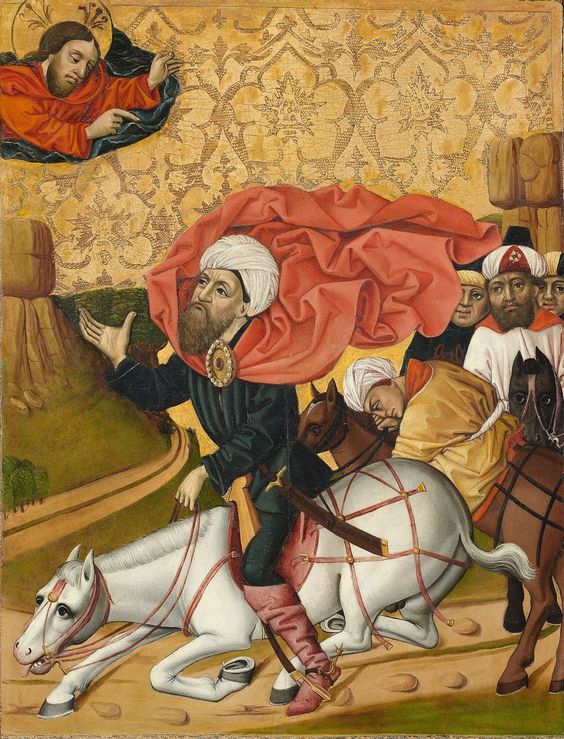
The Second letter to the Corinthians is an uncontested Pauline epistle, however there is debate as to whether it is one single letter or more than one stitched together with its change in tone between chapters seven and eight leading some scholars to conclude that they are two separate epistles. Nevertheless, the letter(s) was written either in 55 or 56 CE a year after writing his first epistle to the Christian community of Corinth after hearing news of rivalry and immoral behavior within the church there.
The first letter, written possibly in 54 CE, addresses church issues such as causes and cures for division, personal disputes, chastity, marriage, and Christian freedom. The purpose of his letter, generally, is to unify the church in right worship by helping Corinth with their issues seeking, above all, uniformity of belief within the community (an ongoing issue if there ever was one).
This first letter, apparently, did not have the effect Paul had hoped for and seeing heresies crop up among the believers there saw fit to defend his own position as an Apostle of Christ as well as try, again, to bring the community back to the gospel as Paul preached, the true gospel according to Marcion (and the Church et large). St. Paul implores the church to turn away from any false doctrine or the missionary work of pagan religions that were seeking converts among the Christian communities. And St. Paul uses this epistle to outline his own authority as an apostle of Christ Jesus, rebuking any such “super-apostle,” who with a silver tongue or showmanship might lead the congregants of the Body of Christ astray,
“But I am afraid that as the serpent deceived Eve by its cunning, your thoughts will be led astray from a sincere and pure devotion to Christ. For if someone comes and proclaims another Jesus than the one we proclaimed, or if you receive a different spirit from the one you received, or a different gospel from the one you accepted, you submit to it readily enough. I think that I am not in the least inferior to these super-apostles. I may be untrained in speech, but not in knowledge; certainly in every way and in all things we have made this evident to you” (2 Corinthians 11:3-6).
St. Paul continues by underscoring his position as an apostle through a declaration of his own revelatory vision that occurred fourteen years before the writing of his letter, putting the experience around 40 CE.
And this is where we find the core of the Way, because it illuminates us to St. Paul’s core… We, through the second letter to the Corinthians, are being illumined to the δύναμις (dunamis), or unmanifest potential, St. Paul encountered in his ecstatic state. It is by soberly understanding this spiritual vision that we might better ascertain St. Paul’s ἐντελέχεια (entelecheia), or his being-at-work-fulfilling-itself, and by extrapolating what St. Paul infers we might better understand what it is Christianity really is in practice as well as St. Paul’s own theology of the cross.
“I must also speak of the visions and revelations in which the Lord has shown himself to me. I know a man, living in Christ; fourteen years ago – whether in the body or in a condition freed of the body, I do not know; God knows it – he was transported into the third heavenly sphere, and about this same man I know – whether he was in body, or in a condition freed of the body, I do not know, God knows it – he was transported into Paradise and perceived unspoken words which may never be spoken by human mouth. On behalf of this man I will praise myself. If I look to my earthly, personal nature, I can only praise my weakness.
“It would by no means be foolish of me if I wanted to praise myself. I speak the truth. But I refrain from it, so that no one should have a better opinion of me than he can form for himself by what he sees and hears of me. That also applies to the wealth of revelations which I have been granted.
“So that I should not myself become presumptuous because of it, a thorn has been given me in my physical body. An angel of satanic power is active there, whose blows strike me, so that I should not presume too much. Because of it I have already asked the Lord three times to cause it to leave me. But he said to me, ‘Be content with the grace that flows to you from me. The higher power completes what is lacking in human weakness.’ Therefore I would rather praise my weakness, so that the power of Christ can be with me. I will be cheerful in my weaknesses, whether the events of my life lift me up or force me down, whether they drive me into the widths or into confinement: everything for the sake of Christ. Whenever I feel my weakness, immediately great strength fills me” (2 Corinthians 12:1-10).
Truth be told, there’s a lot to unpack from these ten verses alone and they demand prayer and contemplation, however for our purposes we will focus on why this particular revelation was given in this letter. St. Paul has kept this to himself, perhaps to close associates as well, for fourteen years! That is an awful long time to go without claiming direct experience with the divine.
So, why now?
As mentioned, St. Paul is more than a little tempestuous due to his first letter going unheeded thus, he goes to great lengths to prove his apostleship to Christ to rebuke those “who seek opportunities to take our place by praising themselves. They are false apostles, deceiving fellow workers who only pretend to be apostles of Christ” (1 Corinthians 11:12-13).
This is St. Paul’s way of asserting his own authority since communities who rejected his gospel rightfully stated he never knew Christ. St. Paul didn’t, of course, know the Christ figure as Jesus of Nazareth was executed roughly five to seven years before the conversion of Saul of Tarsus, who we know as St. Paul.
St. Paul the Apostle did not know Christ, but he knew the apostles and stayed with them, and he–unlike the Apostles–declared the gospel of Christ to Gentiles.
For this reason, Christianity is a world religion.
That cannot be understated, and this legacy begins around the time of his conversion, when the above vision came to him: this ecstatic revelation is the foundation of the Christian tradition, because without it the Way might have been lost within the larger religious culture of Judaism.
To refer back to Marcion’s misguided attempt to disregard the entirety of the Jewish tradition in favor of a Pauline school of Christianity we need only look at St. Paul’s revelation as a rebuttal against Marcion’s dualistic perspective. St. Paul, again, was Jewish and would have been well aware of the Merkabah mysticism that was being developed during Second Temple Judaism, and this mystical practice refers to the revelation recorded in the Book of Ezekiel regarding the Throne of Yahweh. Merkabah is the Hebrew word for chariot.
The visions that were written about during this time form what we know as Apocalyptic, Merkabah, and Hekhalot (palaces) literature beginning with prophetic Judaism found in the Nevi’im portion of the Hebrew Bible. This literature described ascents to heavenly palaces with the ultimate aim of the “Chariot of God,” or throne. We might understand these ascents as a mapping of the Divine worlds with ecological notetaking of the divine creatures that populate these worlds, such as angels.
These divine worlds would eventually, through compilations of rabbinic literature and homilies, number seven in all–Seven Heavens. These levels of the Divine realm would be guarded by angels who thwart the attempts of mere mortals from gazing upon the Throne of God.
The concept of Seven Heavens has existed since, at least, the days of Mesopotamia.
It was also written in this literature that there are unutterable words spoken through these ascents. The practice was a teacher-student system due to the extreme dangers of this form of mysticism (angels are pretty adamant about us not gazing upon God) it became prohibited to discuss openly except between practitioners and those they felt were spiritually sound enough to receive this practice.
The praxis of Merkabah mysticism encompassed contemplative prayer and certain yogic-like body positions that allowed the practitioner to attain states beyond ordinary consciousness and phenomena. The practice of repetitions as found in mantras used in Buddhist and Hindu meditation was also utilized, such as the repeating Shema or other lines of Scripture from the Hebrew Bible.
Now, St. Peter and St. John writes about the experience of the eternal glory of God, witnessed by them, firsthand, through the Son Jesus Christ—the metamorphosis and Resurrection of our Lord being two accounts of His majesty, by the way the metamorphosis is the most profound due to this being a revelation of Christ’s uncreated glory or unmanifest potential. St. Paul was not there for these events, though, and due to this drew criticism from some communities for stating that his truth is the gospel, but St. Paul witnessed the glory of God, too. His conversion on the way to Damascus is the beginning, however his writing about Paradise and the third heaven alludes to a professed practice of the Merkabah mysticism of Second Temple Judaism. The practice of which led St. Paul to the glory of Jesus Christ, Who is seated upon the throne of Ezekiel’s Yahweh.
The vision that occurred to him on the road to Damascus blinded him and we might infer that, regardless of the physical accuracy of this event, the revelation would certainly need time to soak, as it were. When one experiences a profound spiritual insight the best thing to do is sit with it, as St. Paul does with his ascent to heavenly spheres for fourteen years.
This form of mysticism was crucial to the life and Apostolic mission of St. Paul, who–again, is the reason Christianity exists like it does, therefore it is not unreasonable to assume that this practice is a crucial aspect of the Follower of The Way. And should we only use the words of Christ to define our faith and praxis then we need look no further than in the Book of Matthew, written for a Jewish audience who, if not practitioners, were probably aware of this form of mysticism when Christ gives the following instructions: “But you, when you pray, go into your innermost room and close the door. Then send your prayer to the Father, the Ground of the World, into the realm which is hidden from the senses. And the Father, before whose gaze the invisible is apparent, will reward you” (Matthew 6:6).
The implementation of Merkabah mysticism may still be employed today, however in the Jewish tradition this practice was foundational to the development of the Kabbalah which itself is a mystical tool, as well. The mystical practice was preserved in the Christian tradition via Christians like St. Paul in what would become known as hesychasm.
St. Paul’s account gives credence to the Gospel of Mary in that he uses his direct experience of God and revelation of Christ as his authority in confessing the true gospel of Christ. The Gospel account, to recall, focused its attention on salvation through the believer returning to God and liberating themselves from the things of this world. Both the letters to Corinth and the Gospel of Mary demonstrate the significance of the validity of post-resurrection revelation and challenge illegitimate authority and power. Neither are esoteric nor are they Gnostic–they are both mystical experiences as recorded by Followers of the Way.
Lastly, regarding the hidden nature of things concerning the truth of the gospel: the prohibition of Merkabah mysticism within Second Temple Judaism may have inspired St. Paul in his address, “Dear brothers, I could not speak to you as to men of the Spirit. I had to speak to you as to men who are still caught up in their physical being and who are not yet of age as regards the way of Christ. Milk I gave you to drink, I could not yet give you solid food; you did not have strength for it. Even now you do not have the strength for it. You are still caught up in what is earthly. For there is strife and jealousy among you. Does this not show that you are still caught up in earthly things, and are walking on merely human ways? (1 Corinthians 3:1-3).
How can one begin to ascend the Seven Heavens if they are still caught up in earthly things?
How can one love as God loves while there is strife and jealousy among them?
How can one follow the Way of Christ if they are walking on merely human ways?
We must consider that St. Paul, the great transmitter of the gospel of Christ was a strong believer in the student-teacher relationship on the spiritual path, as he writes to Corinth and other communities as a father to his spiritual children, admonishing them and helping them grow strong in Christ and each other, “I do not write this to you in order to shame you, but to show you, as my children, the right direction for your thoughts” (1 Corinthians 4:14). The right direction for your thoughts is the phronema of the church that St. Paul guides his spiritual children to acquire and gives Biblical basis for the ecclesia as seen in the Didache.
The student-teacher relationship is a well-founded tradition in other spiritual paths as well as St. Paul’s own roots in Merkabah mysticism. Accordingly, he would appreciate the importance of slowly helping his children remove the scale from their eyes and the dangers of giving them solid food too early.
Si comprehendis, non est Deus
 Witness, NM