Biblical Criticism: Romans 12-15
I realize now that writing an argumentative essay about the topic of the early church and its consequences to modernity is an easier task in my head that’s full of caffeine.
It’s kind of like concocting a grand life plan at two in the morning, flying high on an eight-ball and Schlitz, but then the morning comes and you figure its too much of a pain to move to England, you don’t know anyone there, and besides—you don’t even have a passport. So, you let the idea die with the sunrise, nevertheless sometimes its better to try and fail than fail by not trying, so I’ll be putting out the bones of my essay after this post.
It may be disorganized, but at least its something and its either I put something out or keep falling into the void of research and to be honest… I think it’s conjuring a bit of a spiritual crisis. Perhaps, I’ve been sitting with one for longer and its coming to the surface now, but the only way out is through.
Whatever that means.
This is the kind of day one appreciates the necessity of spiritual direction and an anam cara. Regardless, what follows is an assignment from my Biblical criticism class from this past term:
Paul’s epistles esteem and rebuke the Christian communities forming in the Greco-Roman empire. His writings share his vision of a Christian religion, a way in which all people can follow the teachings of the Christ figure that had such an impact on the life of Paul and his former life as Saul. The epistle to the Romans, written around 57 CE, by scholarly estimates is a declaration of Paul’s understanding of God’s manifestation in the world and with His people, those no longer who are under the law of Moses, but under the law of Christ. In the twelfth chapter of his epistle he outlines the duties of a Christian and how the members of this community must act in accordance with God and in relation to one another.
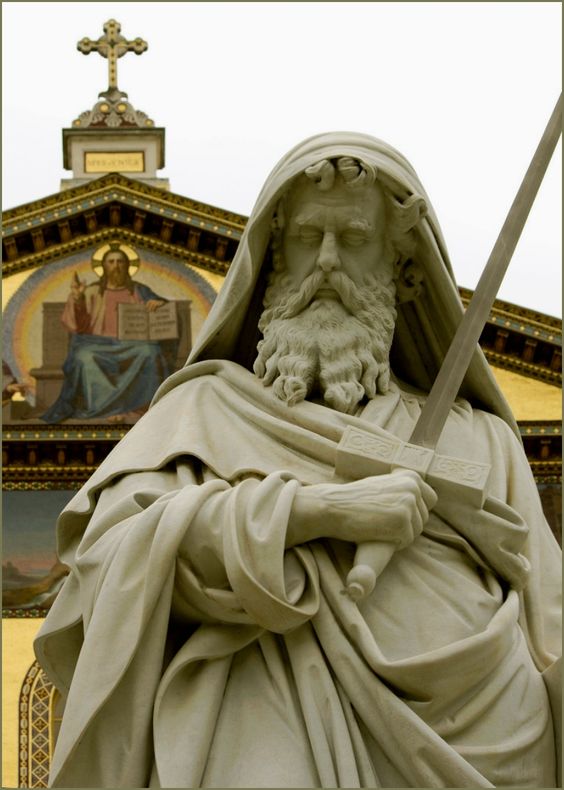
Paul’s epistle, and the twelfth chapter, finds him exhorting the Christian church in Rome to take up the central practice of those who would follow the teachings of the Christ figure. This exhortation is defined by the call to not be fashioned like those of the world, the things of this world, or the time, referring to the changing things of the world. Paul calls the reader to not pattern their lives after the transitory rhythms of culture and earthly authority, but to be transformed: “μεταμορφόω” is the word used by Paul meaning to transform, to transfigure, to change.
The root shares the same root as the word, “μετάνοια” (metanoia) which means to change one’s mind, this is what Paul refers to in his first epistle to the Corinthians, when he compares the one patterned after the age and those transformed, “The natural man does not accept the things that come from the Spirit of God. For they are foolishness to him, and he cannot understand them, because they are spiritually discerned. The spiritual man judges all things, but he himself is not subject to anyone’s judgment. ‘For who has known the mind of the Lord, so as to instruct Him?’ But we have the mind of Christ” (1 Corinthians 2:14-16).
Μετάνοια is central to both John the Forerunner’s and Jesus the Christ’s ministries wherein they exhort their followers and those around them to “Repent, for the kingdom of heaven is at hand!” (Matthew 3:2). The transfiguration of one’s mind, taken from a contextual lens, is the first duty of those who wish to follow the God Who became incarnate, as it was His first words at the beginning of His ministry. The life of Christ can be seen, practically, as the embodiment of what Christians are called to do by Paul in his epistles, giving up of self as a sacrifice to be better aligned to the will of God, just as the reader of Paul’s epistle would have connected to the Garden of Gethsemane.
This mutual sacrifice opens the reader up to the body of Christ, which they are called to join by way of this sacrifice of self and, in one mind, becoming a part of the larger ecclesia of Christ. Therefore by joining with this community the reader is compelled to participate in love; meeting trials with endurance, evil with kindness, persecution with blessings. These core teachings found in the twelfth chapter of the epistle to the Romans is an extension of the Christ figure’s own themes in His teachings: like the Beatitudes in Matthew and “Blessings and Woes” in Luke.
The next chapter offers a continuation of the Law as Christ gave it, “The first of all the commandments is: ‘Hear, O Israel, the Lord our God, the Lord is one. And you shall love the Lord your God with all your heart, with all your soul, with all your mind, and with all your strength.’ This is the first commandment. And the second, like it, is this: ‘You shall love your neighbor as yourself.’ There is no other commandment greater than these” (Matthew 12:29-31). The latter commandment being of great importance in the tenets of a Christian life as given by Paul in his epistles, “Love does no evil to the neighbor; hence, love is the fulfillment of the law” (Romans 13:10).
The love that comes from a sacrifice of self, up to God, and the ecclesia of Christ is the type of love Paul means: “ἀγάπη” (agapé). The Greek language has three different types of love meaning erotic, brotherly, and divine love—and this is the love Paul calls the Christian community to embody, because this love is a benevolent affection, a love shared by God for man and man for God. The type of love that is as unshakable as God’s will.
The chapter concludes with Paul’s call for us to follow the words of the Christ in laying down our anger and issues with our kind, “But I say to you that whoever is angry with his brother without a cause shall be in danger of the judgment” (Matthew 5:22). Paul exhorts the reader to conduct themselves properly due to the Parousia, though it is unclear as to whether Paul believes the Second Coming was imminent through his epistles, he speaks with great urgency toward this revelatory event. This, whether it is anxious or a reminder from the writings of Paul, is still based in scripture alluding to Christ’s own parable of the thief in the night. Regardless of the imminent eschaton of Paul’s belief it is still a Christian duty to act as if the Parousia could occur at any time, a common stance taken by churches to this day.
The fourteenth chapter calls the community to help those who are weak in faith and conscience, for those who are strong in their faith, able to hold fast to the teachings of the church while others, Paul writes in a different epistle, “I fed you with milk and not with solid food; for until now you were not able to receive it, and even now you are still not able; for you are still carnal. For where there are envy, strife, and divisions among you, are you not carnal and behaving like mere men?” (1 Corinthians 3:2-3). The carnal minded men will find a stumbling block in the teachings and the ways of the burgeoning Christian community and Paul calls those who are strong not to make it difficult for those who are weak.
The early church had a word for this “οἰκονομία” (oikonomia), or divine economy, which is a dealing with prudence of members of the body of Christ, to each according to their need. This divine economy is referred to in Paul’s epistle to the Romans, “The one who eats must not despise the one who abstains, and the one who abstains must not pass judgment on the one who eats; for God has welcomed him” (Romans 14:3). Paul calls the reader not to focus on what one does and another does not, but as long as in all things they are done for the glory of God, “For the kingdom of God is not a matter of food and drink, but of righteousness, peace, and joy in the holy Spirit” (Romans 14:17).
The duties of a Christian conclude in the fifteenth chapter of the epistle to the Romans wherein Paul exhorts the reader and the Christian community to welcome all in love, and through the mutual sacrificing of self for the enlargement of the body of Christ, each member of the ecclesia comes together in one mind to and for the glory of God. The renewal of the mind, the transfiguration of the one who would become a member of the church, means that they have put off the old man; they have repented from their fashioning themselves after the world; they have put away envy, strife, and divisions. Paul’s call for the reader to follow the ways of Christ, to become a member of the ecclesia, and the body of Christ means that “There is neither Jew nor Greek, there is neither slave nor free, there is neither male nor female; for you are all one in Christ Jesus” (Galatians 3:28).
The call for the dissolution of division shows the way in which this religion is being spread, throughout all the world in accordance with the themes of the Gospel of Luke, breaking down the national divisions of the Hellenistic world and exclaiming a universal religion and messiah.
Works Cited:
The Editors of Encyclopedia Britannica. “Letter of Paul to the Romans | Summary and Facts.” Encyclopedia Britannica, 20 July 1998, www.britannica.com/topic/Letter-of-Paul-to-the-Romans.
“Romans, CHAPTER 12.” USCCB, bible.usccb.org/bible/romans/12.
“Romans, CHAPTER 13.” USCCB, bible.usccb.org/bible/romans/13.
“Romans, CHAPTER 14.” USCCB, bible.usccb.org/bible/romans/14.
“Romans, CHAPTER 15.” USCCB, bible.usccb.org/bible/romans/15.
“Romans 12 :: King James Version (KJV).” Blue Letter Bible, www.blueletterbible.org/kjv/rom/12/2/s_1058002.
“G3339 – Metamorphoō – Strong’s Greek Lexicon (Kjv).” Blue Letter Bible, www.blueletterbible.org/lexicon/g3339/kjv/tr/0-1.
“G4964 – Syschēmatizō – Strong’s Greek Lexicon (Kjv).” Blue Letter Bible, www.blueletterbible.org/lexicon/g4964/kjv/tr/0-1.
 Witness, NM