Plaiting an AA Awakening
“If we say that we have no sin, we deceive ourselves, and the truth is not in us. If we confess our sins, He is faithful and just to forgive us our sins and to cleanse us from all unrighteousness” (1 John 1:8-9).
The hotel was expensive, let’s not talk about the bill. I have to call a locksmith. Let’s plow ahead with this conclusion.
So, confessing what ails us is not for God’s benefit—God knows, but do we?
There is so much that harms us, so many self-inflicted wounds that tear us up and that we push down, but even Christ revealed His wounds to His disciples.
Let us not be content with our misery by feeding it, let us not be content with turning a blind eye to God with our eyes only on ourselves, pridefully constructing a tower between us and the world, building to nowhere.
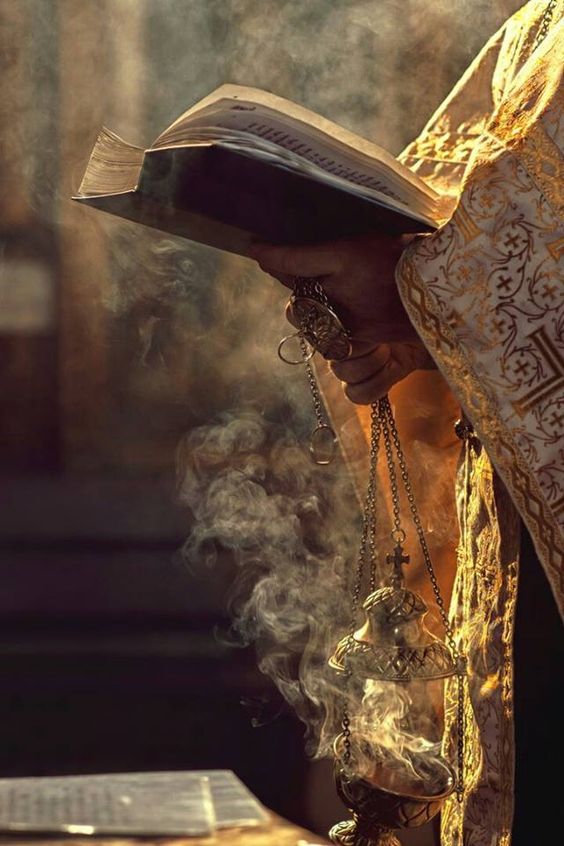
I say this because I am a great sinner. I think given the choice of life or darkness I’d at least be tempted to stare back at the familiarity of the darkness rather than choose life without hesitation. I am distrustful, I am miserable, I’m addicted to self-loathing, because it feels fricking good, it smells sweet, and I am painfully ignorant to God.
“The Word became flesh and made His dwelling among us. We have seen His glory, the glory of the one and only Son from the Father, full of grace and truth” (John 1:14).
I forget He is with me.
I do not know how to trust He is with me.
I do not know how to trust others.
And I know a part of me does not even want to figure out how, so that I can keep living with my familiar misery, in the dark, not comprehending the Light.
Speaking for myself, why would I want to comprehend the Light? I have a lot of anger which either bleeds into or out of false narratives that allow me to justify my own destructive decision. The frustrations I carry comes from a need to control others, wanting them in such and such way, to be such and such way—this takes away their agency, of course, but also allows me to use them or discard them for any illogical and emotional reason I see fit.
This way of being requires a lot of ignorance that seems a lot easier to hold onto than it is to move into a different mode that demands I take responsibility.
But even if I don’t it still does not change the fact that I am the cause of my relationships blowing up, failing, or otherwise shaking hands with destruction because I use the lens of control to see things and the people around me, which is sin. I believe there are a litany of things to confess to a priest, an AA sponsor, or a trusted confidant—some of them sad, some of them horrifying, most of them funny. This itself might miss the issue, though, which is what Step Four is really trying to help us uncover. The Fourth Step helps us localize our behaviors, directing us to the sin sitting below all the explosive elements of addiction.
The sin itself is the root of our passions.
The tears that find us through the grace of compunction and our transformative experience of μετάνοια help to soften the soil of our souls, so we are able to uproot these passions and begin sowing virtues in their place. The hardened heart before knowing God’s love is like a barren, dried field that is impossible to till or penetrate, like trying to grow roses from concrete.
In other words, it feels real skeevy admitting our faults, but it is necessary because confession allows for another person to step in and help us gauge where we are—I know myself through my interactions with others.
The darkness within me is revealed by my relationship with others.
Christianity is a religion focused on communion; Liturgy is a large ritual in which communion can happen; it is the heart and soul of Christianity, the Blood of Christ, diversified by the Holy Spirit growing within us therefore we are participating in communion with others, too. We are unified by the Blood of Christ, diversified by the Holy Spirit coming closer to the Father through becoming like the Son. The Trinity is in communion, three Persons embodying and signifying a relationship between the One God and because we are made in His image, the Godhead points to our own relational nature where we only know ourselves by knowing God and community.
I only know who I am in relation to others which is why it is dangerous for one to become a hermit too early in their monastic journey; why it is dangerous to start drinking home, alone; why it is dangerous to lean on one-self to get clean, to become like God, or simply to live a life. The fullness of community fulfills the individual, thereby making them a person within a larger, unified group. The unification within the Church is the Body of Christ, the Church itself is the Bride of Christ—the ark carrying His Body through the stormy wave pool of life where we are in accordance with one another, in communion, working out our salvation, together–among the cloud of witnesses.
To know one another is being honest with them about ourselves, because there is only so much progress that can be made if we conceal ourselves from others by hiding who we are or our sins as Adam hid when he knew he had sinned, but to be in communion is offering up the self to the unity of the Body of Christ, becoming like Christ and an extension of God on earth. Christ is the mooring rope and purifying the νοῦς is strengthening this connection between heaven and earth, “for the kingdom of heaven is at hand” (Matthew 4:17).
The Fifth Step of AA: Admitted to God, to oneself, and to another human being the exact nature of our wrongs is done through compunction, because we only know the exact nature of our wrongs by the sorrow of our fruits, severing the connection to whom we wish to be in communion with, which is why it is not enough to admit to losing our kid in the airport, committing adultery, or getting into a fight at that travel lodge over menthol cigarettes in Florida… that’s not important. What is important is why we cheat or fight in the first place, because being reprimanded for getting clocked in a motel in Orlando does not always lead to repentance, sometimes you get punched in the face and you punch back, getting meaner and farther away from the whole, with crushed cigarettes no less!
Physical wounds heal, mostly, but the spiritual disease is what needs treatment, but knowing one needs a doctor and actually visiting one are different. The sacrament of confession is supremely tasked with the treating of the spiritual wounds that are poisoning us and our connection to God and to others. These wounds are like a gangrenous growth within the Body of Christ, we do this work together therefore we should all strive to be in alignment with God. It is difficult to get sober in a group of five when one person keeps showing up to meetings smelling like an echo of cheap cigars and an up night, down at the cockfights.
Being in right relation to God means being in communion with others, deepening our understanding of who we are. This work is done in the Church, because this work is eternal and one needs to participate in eternity to facilitate growth. This work is communal because we cannot know where we fall short without others there to help us by putting up the mirror or simply asking how we are doing (which goes a long way).
We do all this in community as well so we can be forgiven which is a liberation from our bondage; our fixed state crystallized in our addictive behaviors and egotistical thought patterns where there is no escape because of the normative aspects of habit and the cold of walking around circles, cyclical self-loathing, like wandering around the airport pick-up lane while its snowing with nowhere to go.
We access a deeper relationship with God, ourselves, and others by forgiveness drawing us into greater responsibility for our thoughts and actions, grounded by the practice of νῆψις. We access deeper levels of communion by forgiving others, on the other hand; it is a radical approach of receiving another where they are, meeting them as God does with us all, and entering a deeper relationship with those we forgive because to know one another is to grow together.
Where there is forgiveness that is where God is, because the type of love shown in forgiveness is the love of the Father, the penetrating and wounding aspects of His love–cutting deep within us and seeing us, truly for who we are. As much as I would find an easier time in becoming like God through elaborate rites like a banishing ritual or astral projection… that does not move us closer to Him. We become like God by forgiving as God forgives, by becoming a localized miracle. We are taking steps to remove the stone, calling out to Lazarus and bringing Light to the dark, from love, through love, and for love readying ourselves for the Sixth Step, to have God remove all these defects of character.
We forgive and love our neighbors as ourselves, as God loves us, which is only accessible through accepting His love, accepting His piercing love through κατάνυξις, being purified by His love which is the only appropriate response to His love, which is change—transformation.
We draw closer together through forgiveness, which is an expression of love—forgiveness is manifesting an eternal reality.
Communal participation prefigures a model of seeing the world that accepts everyone is living with suffering, everyone is consumed by something, everyone who seeks confession earns our forgiveness, and even if they have not sought to confess, we throw forgiveness at them, anyway, because it is not a legalistic reward, where one checks off enough boxes to earn this or that. Forgiveness is a gift; it is a gift for everyone involved because it destroys the concept of “enemy” or “other.”
“Did not the miracles of Jesus Christ, after the resurrection of Lazarus, culminate in the cross on Calvary where, in the full agony of torture, he said: ‘Father, forgive them, for they know not what they do” (Luke xxiii, 34)?
“All that one does is miraculous; all intellectual, psychic and physical functioning according to ‘nature’, i.e. according to human automatism, is mechanical. The Sermon on the Mount is the teaching of doing and of the triumph of functioning.
“‘Love your enemies, do good to those who hate you, bless those who curse you… and pray for those who persecute you, so that you may be sons of your Father who is in heaven.’ (Luke vi, 27-28; Matthew v, 44-45)
“Is this not a teaching which aims at the liberation of the machine, i.e. of all functioning, and which is a school for the miraculous?
“Because to bless those who curse you is a miracle from the point of view of the ‘normal and natural’ functioning of the reactions of the human machine. This does not just happen, it is done (it is created); and I repeat, one only does miracles, and all that is done is a miracle, and nothing is done without it being a miracle. All that which is not a miracle is not really done – it happens, as part of the automatic functioning. It is only through the miracle that true being expresses itself, that the creative Word is revealed” (Meditations on the Tarot 350).
Forgiveness destroys the work of the devil.
Forgiveness and mercy shown to others pushes away the stone from the tombs of the dead and destroys the sweet-smelling Hellmouth.
Forgiveness is liberation and is a revelation of God. God reveals Himself to us in the sacraments and by the Word—expressed in the doing of miracles, living according to His Word—forgiving others is the gift of forgiving ourselves.
It is a gift, a gift of mercy that defies the cycle of self-aggrandizing, self-contempt–it opens a door where one can step out of the wide road to ruin, which is a lock step unto death. The forgiveness we give us others is the forgiveness we give ourselves, deepening our path on the cross, in the vertical.
The gift that begets mercy is the gift of tears leading to humility and it is only in taking the Fourth and Fifth Step wherein we examine our darkness and bring it to the Light that we can step into the profundity of suffering in all. When we recognize the suffering in others our capacity for forgiveness grows, because our suffering is become nonlocal, it goes beyond us—it is a worldly problem in this fallen state of humanity. We are all suffering, because we are all living in the dark in some way or another.
When God remove all these defects of character this is a transformative liberation, freeing us not from what our addiction is expressed through, but the underlying conditions that made our soil so powerfully adept at growing these passions that could only come to fruition through addiction. The Light can shine on our garden now that it’s been rooted and to go through it is awful. Dying to the self is awful, putting off the old man is a grieving process, but do not make the mistake of ancestralizing your problems, keeping them tucked away in a nganga because it’s too horrible to even look at them, much less shine a Light on them.
Let God, the physician, perform surgery and remove all the nfumbe from your system, do not spare the Good doctor in what ails you, tell Him everything, tell your trusted partner everything. It’s a state of the fallen man to keep things tightly within, to assume that ignoring an issue or not looking at it will make it go away, such is the folly of this reverse apotheosis. Recovery is a miracle, because it is going against our natural program and reactionary senses–recovery is a lifetime process and always difficult, but when one does it becomes easier for the other. We’re all climbing this mountain together… Hell, we’re all climbing out of this hole, together ascending to a more perfect union with God and one another. That takes all of us becoming miraculous and carrying our cross, knowing full well where it leads, but also to Whom it leads.
So, I need to put in the work and build humility, bring forth my severing aspects to the Light and sacrifice my self-loathing up to God, because no matter what it all goes back to Him, anyways, “So shall My word be that goes forth from My mouth; It shall not return to Me void, But it shall accomplish what I please, And it shall prosper in the thing for which I sent it” (Isaiah 55:11). All returns to Him, so I might as well get over myself and let it serve its purpose under His watch, under His guidance, within His providence, “He must increase, but I must decrease” (John 3:30).
Refuse the jaws of Hades by not becoming them.
Let the Light in on your problems, because I assure you the Light draws near. All things were made through the Light, and without the Light nothing was made that was made.
The Light is here. It always was and always shall be and it gives us strength so “We will not regret the past nor wish to shut the door on it” (AA Promises). Selah.
Crap, I still don’t have my keys.
Si comprehendis, non est Deus
 Witness, NM